Types of Testosterone for Bodybuilding: What's the Difference?
Cypionate vs. Enanthate vs. Propionate. We break down the common types of testosterone for bodybuilding, comparing their half-life, risks, and uses.

This content is for informational purposes only and does not constitute medical advice. The use of testosterone for bodybuilding without a prescription is illegal and carries significant health risks. Always consult with a qualified healthcare provider before considering any hormone therapy.
When you hear the word "testosterone," images of muscle, strength, and peak male performance often come to mind. For decades, bodybuilders have sought to optimize this primary male hormone to achieve their physique goals. Understanding the different types of testosterone for bodybuilding is a critical first step for anyone exploring this topic, whether for medically supervised hormone replacement or purely for information. This guide will break down everything you need to know in 2026, from how testosterone works to the specific formulations available.
What Is Testosterone?
Testosterone is the primary androgenic-anabolic steroid (AAS) and the main sex hormone in males. It is responsible for developing male reproductive tissues and promoting secondary sexual characteristics like increased muscle mass, bone density, and body hair growth. For bodybuilding, its anabolic properties are a powerful tool for accelerating muscle growth and strength.
While the body produces testosterone naturally, some individuals use exogenous (external) testosterone to raise their levels. This can be for legitimate medical reasons, such as treating hypogonadism (clinically low testosterone), a practice known as testosterone replacement therapy (TRT). It can also be used by athletes and bodybuilders, often at higher-than-therapeutic doses, to significantly enhance muscle-building potential. These different uses often involve different strategies and dosages, but the underlying hormone and its mechanisms remain the same. Understanding the distinction between TRT and performance enhancement is crucial for any conversation about testosterone.
How Does Testosterone Build Muscle?
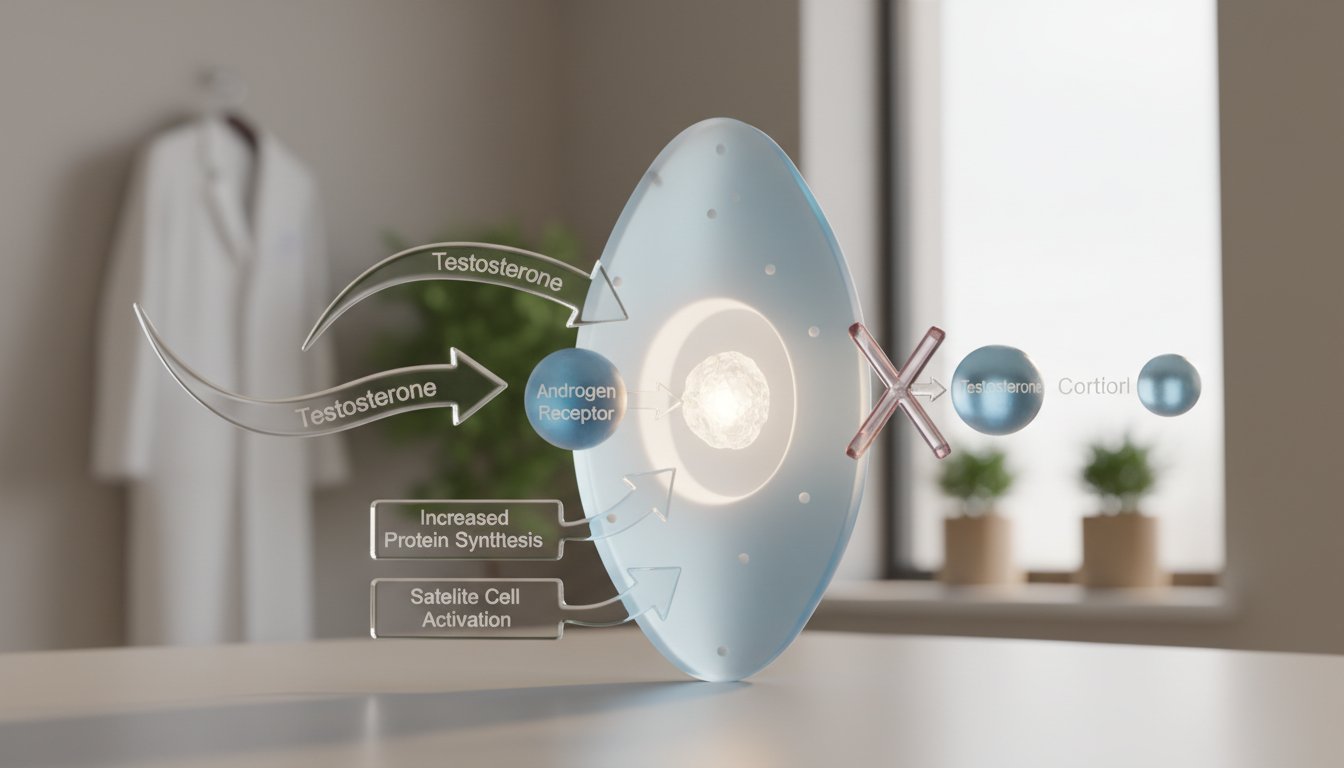
Testosterone works its muscle-building magic through several key biological pathways. When you introduce exogenous testosterone into your system, it circulates through the bloodstream and binds to specific sites on your muscle cells called androgen receptors. This binding event is like turning a key in a lock, which sets off a cascade of cellular events.
First and foremost, it dramatically increases muscle protein synthesis. Think of your muscles as a brick wall. Protein is the bricks, and protein synthesis is the process of laying those bricks to build the wall bigger and stronger. Testosterone signals your cells to accelerate this process, allowing you to build muscle tissue faster than you normally could.
Second, testosterone boosts the number of satellite cells. These are special stem cells located on the outside of your muscle fibers. When you train hard and cause microscopic damage to your muscles, these satellite cells are activated. They multiply and fuse to existing muscle fibers, donating their nuclei and helping the fibers grow larger and stronger. Testosterone makes this repair and growth process more efficient.
Third, it has a powerful anti-catabolic effect. Catabolism is the breakdown of muscle tissue. Your body is always in a state of flux, building up (anabolism) and breaking down (catabolism). The stress hormone cortisol is a primary driver of catabolism. Testosterone helps to block cortisol's access to its receptors on muscle tissue, effectively protecting your hard-earned muscle from being broken down for energy. This shifts the balance heavily in favor of anabolism, leading to a net gain in muscle mass over time. This combination of increased protein synthesis, enhanced satellite cell activity, and reduced muscle breakdown is what makes testosterone such a potent agent for muscle growth.
Benefits of Testosterone for Bodybuilding
Using testosterone for bodybuilding provides several powerful, evidence-backed benefits that go beyond simply looking bigger. These effects are why it has been a staple in physique sports for so long.
Increased Muscle Mass (Anabolism)
The most sought-after benefit is a significant increase in lean muscle mass. As explained above, testosterone directly stimulates muscle protein synthesis, the fundamental process of building new muscle tissue. The Testosterone Trials (TTrials), a major set of studies on older men, confirmed that testosterone treatment improved physical function, which is closely linked to muscle mass and strength (GLPbase). While these studies were on hypogonadal men, the anabolic principle is the same for athletes, just often at a greater magnitude due to higher doses and intense training protocols. This leads to faster and more substantial gains than what is achievable through natural training alone.
Enhanced Strength and Power Output
More muscle means more strength. As testosterone helps you build larger and denser muscle fibers, your ability to produce force increases. This translates directly into lifting heavier weights in the gym. Heavier lifting creates a greater stimulus for even more muscle growth, creating a powerful positive feedback loop. Athletes often report breaking through strength plateaus that had stalled them for months or even years shortly after starting a testosterone protocol. You can learn more about how different dosages affect results in our TRT dosage chart guide.
Improved Recovery and Reduced Muscle Soreness
One of the less-discussed but equally important benefits is dramatically improved recovery. By promoting satellite cell activation and reducing the catabolic effects of cortisol, testosterone helps your body repair muscle damage from intense workouts much more quickly. This means you can train harder and more frequently without overtraining. You will experience less delayed onset muscle soreness (DOMS) and feel ready for your next session sooner. This ability to handle a higher volume and intensity of training is a key driver of long-term progress.
Decreased Body Fat
Testosterone also plays a role in regulating fat metabolism. It can help increase your metabolic rate and encourages your body to burn fat for fuel. At the same time, by increasing muscle mass, you are building more metabolically active tissue, which further increases your daily calorie expenditure. This combination makes it easier to achieve a lean, defined physique. Many users find they can build muscle and lose fat simultaneously while on a testosterone cycle, a difficult feat for most natural lifters.
Not sure if hormone optimization is the right path for your goals? The world of performance enhancement can be complex. Take our free quiz to see if you're a candidate and get matched with a provider who can guide you.
A Deep Dive into the Types of Testosterone for Bodybuilding
The term "testosterone" doesn't refer to a single product. It is a base hormone that is attached to an "ester"—a chemical chain that controls how quickly the hormone is released into your body. This is why you see different names like "cypionate" or "enanthate." The ester determines the hormone's half-life, which in turn dictates how often you need to administer it. Let's explore the common types of testosterone for bodybuilding.
Testosterone Cypionate
Testosterone cypionate is a slow-acting injectable ester. As of 2026, it remains the most commonly prescribed form of testosterone in the United States (PeakedLabs, 2026).
- Half-Life: Approximately 8 days (Ironoverload Steroids Community).
- Injection Frequency: Typically once or twice per week to maintain stable blood levels.
- Carrier Oil: Usually suspended in cottonseed oil.
- Experience: Known for being a smooth and less painful injection for most users.
- Cost & Availability: Widely available through prescription. Commercial generic vials can cost between $30 and $80, though a persistent shortage since 2023 can affect availability (PeakedLabs, 2026). You can find more specific pricing information in our post on testosterone cypionate 200mg price without insurance.
Because of its long half-life and stable release, cypionate is a favorite for both TRT patients and bodybuilders running longer cycles.
Testosterone Enanthate
Testosterone enanthate is very similar to cypionate and is often used interchangeably. It's more popular in Europe but is still widely available in the U.S., particularly through compounding pharmacies.
- Half-Life: Around 5 to 7 days, slightly shorter than cypionate (PeakedLabs, 2026).
- Injection Frequency: Usually injected once or twice per week.
- Carrier Oil: Traditionally suspended in sesame oil, which can be a point of difference for users with sensitivities.
- Cost & Availability: Available from compounding pharmacies for $40-$120 per vial. The brand-name auto-injector Xyosted is a much more expensive option, costing $400-$600 monthly without insurance (PeakedLabs, 2026).
Studies show that when dosed appropriately, enanthate and cypionate produce equivalent testosterone levels. The choice between them often comes down to availability, cost, and personal preference regarding the carrier oil. For a full comparison, see our guide on the best testosterone injection for muscle gain.
Testosterone Propionate
Testosterone propionate is a much faster-acting ester, which fundamentally changes how it's used.
- Half-Life: Roughly 4.5 days, though some sources state it's even shorter (Ironoverload Steroids Community).
- Injection Frequency: Requires much more frequent injections, typically every other day or even daily, to maintain stable blood levels and avoid peaks and troughs.
- Experience: The frequent injection schedule and the nature of the propionate ester can lead to more post-injection pain (PIP) for many users.
- Use Case: Its fast-acting nature means it clears the system quicker, making it a choice for pre-competition athletes. Some bodybuilders also believe it leads to less water retention and a "denser" look, making it popular for cutting phases (Ironoverload Steroids Community).
Testosterone Undecanoate (Injectable)
Injectable testosterone undecanoate, sold under brand names like Aveed, is the longest-acting ester available.
- Half-Life: A very long half-life of about 34 days (GLPbase).
- Injection Frequency: Due to its extremely slow release, injections are only required every 10 weeks in a clinical setting.
- Use Case: This formulation is used exclusively for medical TRT due to its dosing schedule, which does not allow for the rapid adjustments bodybuilders often make during a cycle. It is not a practical choice for performance enhancement.
Testosterone Undecanoate (Oral)
For years, oral testosterone was not viable due to severe liver toxicity. However, new formulations have changed the game. Brands like TLANDO, JATENZO, and KYZATREX use a self-emulsifying drug delivery system that allows the testosterone to be absorbed through the lymphatic system, bypassing the liver and avoiding toxicity.
- FDA Approval: These new oral options were approved between 2019 and 2022 for treating male hypogonadism (Urology Times; KYZATREX Data).
- Efficacy: Clinical trials have shown these oral capsules are effective. One trial for Tlando found 80% of patients achieved normal testosterone levels (Urology Times), while a KYZATREX study showed 96.1% of men hit the target range (PubMed). A two-year study on JATENZO found it maintained testosterone in the mid-eugonadal range and improved sexual function (Oxford Journals).
- Dosing: Typically taken twice daily with food.
- Risks: While they don't cause liver damage, they have been associated with a small but notable increase in blood pressure (1.7-6 mmHg) and are contraindicated for men with known or suspected prostate cancer (KYZATREX Data; Oxford Journals).
- Use Case: These testosterone tablets for men are a convenient, injection-free TRT option, but their high cost and twice-daily dosing make them less common for bodybuilding purposes.
Other Forms: Gels, Creams, and Pellets
Beyond esters, testosterone can be administered in other ways:
- Topical Gels/Creams: Applied daily to the skin. This method offers convenience but can be messy and carries a risk of transference to others. It can also lead to higher conversion of testosterone to Dihydrotestosterone (DHT), which can exacerbate side effects like hair loss. Monthly costs typically range from $100 to $250 (PeakedLabs, 2026).
- Subcutaneous Pellets: Small pellets are implanted under the skin in a minor office procedure and release testosterone slowly over 3-6 months. This is a "set it and forget it" method with great level stability, but it's expensive ($400-$900 per insertion) and does not allow for dose adjustments once implanted (PeakedLabs, 2026).

Risks and Side Effects of Using Different Types of Testosterone for Bodybuilding
While the benefits are significant, using any of the types of testosterone for bodybuilding comes with a host of potential risks and side effects, especially at the supraphysiological doses common in performance enhancement.
- Estrogenic Side Effects: Your body uses an enzyme called aromatase to convert a portion of testosterone into estrogen. When testosterone levels are artificially high, estrogen levels can also rise dramatically. This can lead to gynecomastia (the development of male breast tissue), significant water retention, and high blood pressure.
- Androgenic Side Effects: These are related to the "male" characteristics of testosterone. They can include oily skin, severe acne (especially on the back and shoulders), accelerated male pattern baldness in genetically predisposed individuals, and increased body hair growth.
- Cardiovascular Strain: This is one of the most serious risks. Testosterone can negatively impact cholesterol levels by lowering HDL ("good" cholesterol) and raising LDL ("bad" cholesterol). It also increases red blood cell production, which thickens the blood (increases hematocrit). The recent large-scale TRAVERSE trial, while showing noninferiority for major adverse cardiovascular events in a TRT population, still highlights this as a key area of concern (GLPbase). Furthermore, oral testosterone undecanoate formulations have been shown to cause a slight increase in systolic blood pressure (JATENZO Study). These factors combined can increase the risk of heart attack and stroke. You can read more about the potential downsides of TRT.
- Natural Production Shutdown: When you introduce external testosterone, your brain senses the high levels and tells your testes to stop producing their own. This is called hypothalamic-pituitary-testicular axis (HPTA) suppression. This shutdown is temporary while on a cycle, but recovery can be a long and difficult process, often requiring a specific post-cycle therapy (PCT) protocol to restart natural production.
- Other Risks: Other potential side effects include mood swings, aggression ("roid rage"), and potential prostate issues. This is why using testosterone for non-medical reasons has serious consequences, which we discuss in our post on TRT bodybuilding side effects.
How to Get Started with Testosterone
Using testosterone legally and safely begins with a visit to a qualified doctor. Self-diagnosing or obtaining testosterone from illicit sources is dangerous and illegal. The proper process involves several key steps.
First, you'll need a comprehensive consultation with a physician, ideally one specializing in hormone optimization. You will discuss your symptoms, health history, and goals. Symptoms of low testosterone can include low energy, reduced libido, depression, and difficulty building muscle. You can use our hormone symptom checker to get a preliminary idea of your status.
Next is bloodwork. A doctor will order a blood panel to test your testosterone levels. This will measure not just your total testosterone but also your free testosterone, estradiol (estrogen), PSA (prostate health marker), and other important health indicators. This baseline data is essential for a proper diagnosis of hypogonadism and for monitoring your health during therapy.
If you are diagnosed with hypogonadism, your provider will discuss the different treatment options with you, including injections, gels, or oral capsules. They will help you decide which method best fits your lifestyle, budget, and health profile. You can find online doctors that prescribe testosterone in the U.S. through reputable telehealth platforms.
Want to see which options fit your budget and goals? Our free quiz takes 3 minutes and connects you with vetted providers in your area. Don't guess when it comes to your health.
Legal Status and FDA Approval
It is critical to understand the legal landscape surrounding testosterone in the United States. Testosterone is classified as a Schedule III controlled substance. This means possessing or using it without a valid prescription from a licensed medical provider is a federal crime.
FDA approval for testosterone products is strictly for the treatment of medical conditions, primarily male hypogonadism, which is a diagnosed deficiency of testosterone production. The FDA has approved multiple formulations for this purpose, including injectable cypionate, enanthate, and undecanoate (Aveed), as well as transdermal gels, patches, and the newer oral undecanoate capsules like Tlando and KYZATREX (GLPbase; Urology Times).
The use of testosterone for bodybuilding or athletic performance enhancement is considered an "off-label" use and is not an FDA-approved indication. A doctor cannot legally prescribe testosterone simply because a patient wants to build more muscle. A prescription requires a legitimate medical diagnosis of hypogonadism, confirmed through symptoms and blood tests. Anyone obtaining testosterone through other means is participating in an illegal activity and exposing themselves to unregulated products that may be contaminated, under-dosed, or not what they claim to be.
Ready to explore your options with a licensed professional? It's the first step toward understanding if hormone optimization is right for you. Take our free 3-minute quiz to get matched with a licensed provider who can create a plan based on your unique health profile.
Frequently Asked Questions
What are the main types of testosterone for bodybuilding?
The most common types used for bodybuilding are injectable testosterone esters. These include Testosterone Cypionate and Testosterone Enanthate, which have long half-lives and require weekly or twice-weekly injections. Testosterone Propionate is another popular choice, especially for cutting phases, but its shorter half-life requires more frequent injections.
How often do you need to inject testosterone for bodybuilding?
This depends entirely on the ester used. Testosterone Propionate, with its short half-life, is often injected every other day. Testosterone Cypionate and Enanthate, with longer half-lives of about a week, are typically injected one to two times per week to maintain stable blood hormone levels.
Can you take testosterone orally for bodybuilding?
Yes, oral testosterone capsules like JATENZO, TLANDO, and KYZATREX are now FDA-approved for treating low testosterone. They bypass the liver, avoiding the toxicity of older oral steroids. However, they are expensive, require twice-daily dosing, and are generally prescribed for medical TRT, not bodybuilding cycles.
Does using testosterone for bodybuilding shut down your natural production?
Yes. When you introduce an external source of testosterone, your brain's feedback loop signals your testes to stop producing their own. This is known as HPTA suppression. Natural production typically remains shut down for the duration of the cycle and requires time and often a post-cycle therapy (PCT) protocol to recover afterward.
Is it legal to use testosterone for bodybuilding?
No. In the United States, testosterone is a Schedule III controlled substance. It is only legal to possess and use with a valid prescription from a doctor for a diagnosed medical condition like hypogonadism. Purchasing or using testosterone for bodybuilding purposes without a prescription is illegal.
What is the difference between TRT and a bodybuilding "cycle"?
The primary difference is dosage and intent. TRT (Testosterone Replacement Therapy) involves using medically prescribed testosterone to bring low levels back into the normal physiological range. A bodybuilding "cycle" involves using much higher, supraphysiological doses of testosterone (and often other anabolic steroids) for the purpose of significant muscle and strength enhancement.
Contributing to evidence-based peptide education and provider transparency.
Too many clinics, not enough clarity?
We don't sell peptides. Tell us your goals and we'll connect you with a vetted provider who can figure out what actually makes sense for you.
See what's right for youRelated articles
Which Protein Supplements for Muscle Growth Actually Work?
Tired of the hype? Find out which protein supplements for muscle growth are backed by science and learn how to pick the right one for your goals.
Hormone TherapyWhat Are the Real Magnesium Glycinate Benefits?
Uncover the science-backed magnesium glycinate benefits. We explore its effects on sleep, stress, and muscle function and explain why it's a top choice.
Hormone TherapyWhat B12 Shot Benefits Can You Actually Expect?
B12 shots are often hyped for energy, but the real b12 shot benefits are more specific. Learn who is a true candidate and what results to expect.