What Getting on TRT in 30s is Actually Like
Feeling a persistent drag? You're not alone. Learn why starting TRT in 30s is more common than ever and discover the actual risks and benefits.

This content is for informational purposes only and does not constitute medical advice. Always consult with a qualified healthcare provider for any health concerns or before making any decisions related to your health or treatment.
Testosterone Replacement Therapy, or TRT, used to be a topic reserved for men in their 50s and beyond. Not anymore. In 2026, starting TRT in 30s is not just a fringe idea, it's a rapidly growing conversation. If you're feeling a persistent drag, struggling in the gym, or noticing your drive isn't what it used to be, you're not alone. Research shows a significant interest in hormone optimization among younger men, with one study noting an 86% jump in TRT usage for men aged 25-34 in recent years (VidaVital MD).
But deciding to start TRT in 30s brings up serious questions. Is it safe for the long haul? What are the real risks versus the benefits? And with new treatments emerging, what are the actual options on the table today? This guide will walk you through the current landscape of testosterone therapy for men in their third decade, covering everything from groundbreaking new pills to the crucial topic of fertility. For a foundational understanding of what TRT is, you can read our detailed overview in What Is TRT and Who Is It Actually For?.
Why Are More Men Considering TRT in their 30s in 2026?
The image of a man with low testosterone is no longer just a grandfatherly figure. A growing number of men in their prime are seeking answers for symptoms that were once dismissed as "just stress" or "getting older."
The symptoms of clinically low testosterone can significantly impact your quality of life. They often include:
- Persistent fatigue and low energy levels
- Reduced libido and sexual function
- Brain fog or difficulty concentrating
- Loss of muscle mass and increased body fat
- Mood swings, irritability, or feelings of depression
While testosterone levels naturally decline with age, some data suggests an age-independent decline among men in the U.S., meaning today's 30-year-olds might have lower levels than their fathers did at the same age (Marius Pharmaceuticals). This, combined with a greater awareness of men's health, has led to a massive shift. In 2026, an estimated 40% of men under 40 have expressed interest in testosterone optimization, with nearly 14% currently using or having used TRT (VidaVital MD).
The stigma that once surrounded low T is fading. An estimated twenty million men in the U.S. struggle with this condition, and more are opening up about it (Hims News). The rise of telehealth has also made it easier and more discreet to get help. You can now get comprehensive lab work and consult with a doctor from home. If you're curious about your own numbers, you can learn about the process in our guide on how to test my testosterone levels.
This isn't just about chasing a number on a lab report. It's about men wanting to feel and perform at their best.
Not sure if your symptoms point to low testosterone? Our free Hormone Symptom Checker can help you identify potential issues to discuss with a provider. And if you're ready to speak with a professional, our quick quiz can match you with a vetted clinic.
The New Landscape of Treatment: Options for TRT in Your 30s
If your blood work confirms clinically low testosterone, the next step is discussing treatment options with your provider. The world of TRT in 2026 is much broader than it was just a few years ago. Here are the main options you'll likely encounter.
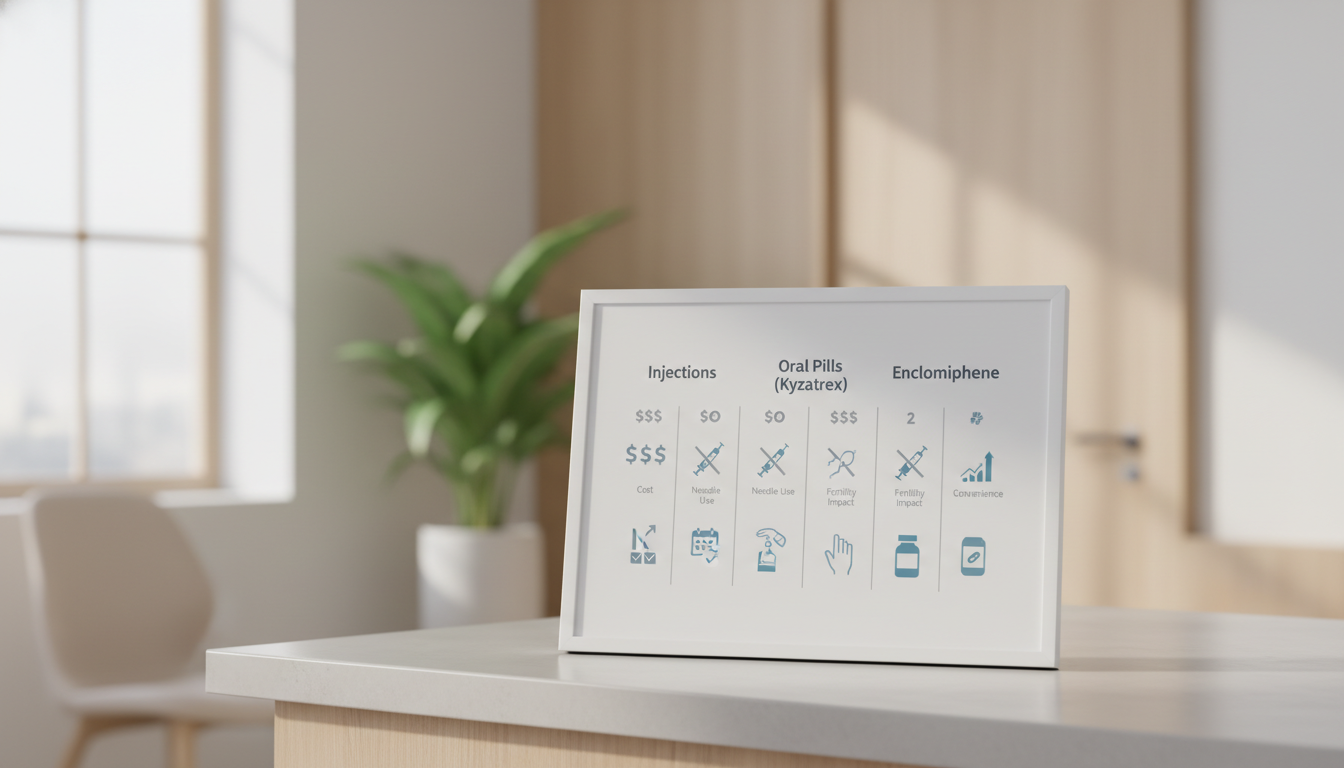
Testosterone Injections
This is the traditional and often most affordable method. Testosterone cypionate or enanthate is injected into a muscle or subcutaneous fat, typically once or twice a week.
- Pros: Highly effective, low medication cost, long history of use.
- Cons: Requires self-injecting, can cause peaks and troughs in hormone levels, leading to mood or energy fluctuations.
- Cost: The medication itself can be as low as $20-$100 per month. All-inclusive telehealth programs, which bundle medication, consultations, and lab work, are becoming popular. For example, MangoRx launched a $99/month injectable program, while other online clinics typically range from $100-$250 a month (ShotFreeTRT, MangoRx). You can explore testosterone injection benefits in more detail in our related post.
Gels and Creams
These are applied daily to the skin, usually on the shoulders or upper arms.
- Pros: Needle-free, provides stable daily hormone levels.
- Cons: Risk of transference to partners or children through skin contact, can cause skin irritation, may not absorb well in all individuals.
- Cost: Generally more expensive than injections. A platform like Male Excel offers a Testosterone Lipoderm Cream starting at $132/month, on top of a required $99/month medical membership (Male Excel).
Oral TRT Pills: The 2026 Breakthrough
For years, the idea of a safe and effective testosterone pill was out of reach due to concerns about liver health. That has completely changed. The introduction of FDA-approved oral testosterone undecanoate, specifically a brand called KYZATREX, is a major development.
This isn't one of the risky "prohormones" you might see online. KYZATREX is a prescription medication shown in clinical trials to be highly effective. In one Phase III study, up to 96% of men on the treatment restored their testosterone to normal levels (Marius Pharmaceuticals). It's designed to be absorbed through the lymphatic system, avoiding the first-pass through the liver that made older oral versions dangerous. Some platforms are now offering it, with studies showing it can double a man's free testosterone on average (Hims News). These are the best TRT pills to discuss with a provider in 2026.
- Pros: Needle-free, convenient daily dosing, effective.
- Cons: Higher cost, must be taken with food for proper absorption.
- Cost: Branded oral TRT can be expensive without insurance, running $400-$700 a month. However, compounded versions are becoming available through some clinics for around $100-$250 per month, making them more accessible (ShotFreeTRT).
Fertility-Preserving Alternative: Enclomiphene
For many men in their 30s, maintaining fertility is a top priority. This is where traditional TRT presents a problem, as it shuts down your body's natural hormone production, including the signals needed for sperm production.
Enclomiphene works differently. It's a selective estrogen receptor modulator (SERM) that blocks estrogen at the pituitary gland. This "tricks" your body into producing more of its own luteinizing hormone (LH) and follicle-stimulating hormone (FSH). The result is a significant increase in your natural testosterone production without shutting down your system. Some providers report it can double testosterone levels while preserving fertility, making it a leading choice for younger men (VidaVital MD, Hims News).
Feeling overwhelmed by the choices? Deciding between injections, pills, or a fertility-sparing option depends on your health, lifestyle, and goals. Take our free 3-minute quiz to get matched with a licensed provider who can create a plan for you.
The Reality of Long Term TRT and Associated Side Effects
Committing to long term TRT is a significant medical decision, and it’s critical to understand the potential side effects. While a qualified provider can help manage these risks, you should go in with your eyes open.
Fertility Suppression
This is arguably the biggest concern for men considering TRT in 30s. When you introduce testosterone from an external source (exogenous testosterone), your brain stops sending signals to your testes to produce their own. This shuts down both testosterone and sperm production. For most men on traditional TRT, sperm count will drop to zero or near-zero, causing infertility.
While this effect is often reversible after stopping TRT, it can take months or even over a year to recover, and recovery is not guaranteed. This is why enclomiphene has become such a popular first-line therapy for younger men. There is also new research underway. A pilot study was initiated to specifically investigate the impact of oral TRT (Kyzatrex) on spermatogenesis, a question that could change future treatment protocols if it's found to be less suppressive than injections (Urology Times).
Heart Health and Blood Pressure
One of the most talked-about TRT negative side effects is its impact on cardiovascular health. The concern is often linked to increased red blood cell count (hematocrit), which can thicken the blood, and potential changes in blood pressure.
However, recent data from the large Phase III trial for KYZATREX provides some clear context. The study reported a very modest mean increase in systolic ambulatory blood pressure of just 1.7 mmHg. Hypertension was the only drug-related adverse event seen in more than 2% of participants (PubMed). This suggests that with modern formulations and proper medical supervision, the cardiovascular risks may be less dramatic than once feared. Your doctor will monitor your blood pressure and blood work regularly.
Hair Loss
Will TRT make you go bald? It's a common question. The answer is: maybe. TRT does not directly cause baldness, but it can accelerate male pattern baldness in men who are already genetically predisposed to it. Testosterone can be converted into a more potent androgen called dihydrotestosterone (DHT). DHT is the primary hormone responsible for shrinking hair follicles on the scalp. If your family has a history of hair loss, TRT could speed up that process. This is a crucial risk to discuss with your provider.
Other Potential Side Effects
Properly managed TRT aims to keep your hormones in a healthy, optimized range, not push them to supraphysiological levels. However, imbalances can still occur, leading to side effects.
- Estrogen Conversion (Aromatization): Some testosterone will convert to estradiol (a form of estrogen). If levels get too high, it can cause water retention, moodiness, and gynecomastia (the development of male breast tissue). This is managed through dose adjustments or sometimes with a medication called an aromatase inhibitor.
- Acne and Oily Skin: Increased androgen levels can stimulate oil glands, leading to acne, particularly on the back and shoulders.
- Impact on Women: It's worth noting here that while this article focuses on men, TRT is sometimes used off-label for women. The TRT side effects women experience can include virilization symptoms like a deepening voice, clitoral enlargement, and hair growth, which is why dosing and monitoring are critically different. You can read more on side effects of TRT in women.
Managing the long-term side effects of TRT is not a DIY project. It requires a close partnership with your doctor, with regular blood tests to monitor your levels and ensure your protocol is safe and effective. You can explore a full breakdown of the potential risks in our article on the downsides of TRT.

What to Consider Before Starting TRT in Your 30s
You’ve read about the symptoms, the options, and the risks. Before you move forward, here are the key steps and considerations to ensure you’re making a sound decision.
1. Get Comprehensive Lab Work
A single testosterone test isn't enough. A responsible provider will order a full hormone panel to get a complete picture of your health. According to platforms like Male Excel, a proper initial blood test should measure:
- Total and Free Testosterone
- Estradiol (E2)
- DHEA-S
- Prostate-Specific Antigen (PSA)
- Thyroid markers like Free T3
This comprehensive screening helps rule out other potential causes of your symptoms and establishes a baseline for treatment.
2. Analyze the Costs
TRT is a long-term financial commitment. As of 2026, costs can vary widely.
- Most Affordable: Injectable testosterone remains the cheapest option, with all-inclusive online clinic programs ranging from $100 to $250 per month (ShotFreeTRT). Some, like MangoRx, even offer plans starting at $99/month.
- Mid-Range: Compounded oral TRT and creams typically fall in the $100 to $250 per month range.
- Most Expensive: Branded, FDA-approved oral TRT like Kyzatrex or Jatenzo can cost $400 to $700 or more per month without good insurance coverage (ShotFreeTRT).
Always ask a potential clinic for a full breakdown of costs, including consultations, medication, and required follow-up labs.
3. Choose the Right Provider
The rise of telehealth has made TRT more accessible than ever, with many men finding excellent care through online doctors that prescribe testosterone. Current regulations allowing for the remote prescription of controlled substances like testosterone have been extended through December 31, 2026, though laws can vary by state (Male Excel).
Whether you choose an online clinic or a local doctor, prioritize finding a provider who specializes in hormone optimization. They should be willing to discuss all options, including enclomiphene, and explain the pros and cons of each. Don't be afraid to read reviews and find a clinic you trust.
4. Be Realistic About Results and Lifestyle
TRT can produce remarkable results, but it's not a substitute for a healthy lifestyle. The amazing TRT before and after men transformations you see online are almost always the result of combining therapy with consistent exercise and a solid nutrition plan. Therapy can give you the energy and drive to hit the gym, but it won't do the work for you. Feeling great is a combination of optimized hormones and healthy habits. Many people wonder, "Is TRT worth it?" The answer often depends on your commitment to the entire process.
Ready to explore your options with a professional? The journey to hormone optimization starts with a conversation. Take our free 3-minute quiz to get matched with a licensed provider who understands the nuances of TRT and can help you determine the right path forward.
FAQs
How long does it take to feel the effects of TRT?
Effects vary by individual. You might notice improvements in mood, mental clarity, and libido within the first 3 to 6 weeks. Changes in body composition, such as increased muscle mass and decreased fat, typically take longer, often becoming noticeable after 3 to 6 months of consistent therapy and exercise.
Can you stop TRT once you start?
Yes, you can stop TRT, but it should always be done under the guidance of a doctor. Abruptly stopping will cause your testosterone levels to crash, leading to a return of symptoms and potentially feeling worse than before you started. A provider will create a "restart" protocol, which may involve medications like HCG or clomiphene, to help stimulate your body's natural testosterone production again.
What are the best TRT pills available in 2026?
In 2026, the best and safest TRT pills are FDA-approved oral testosterone undecanoate formulations like KYZATREX. Unlike older, unregulated oral steroids that were toxic to the liver, these modern prescription pills are designed to bypass the liver and have been proven safe and effective in clinical trials for treating hypogonadism.
Will TRT cause hair loss?
TRT can accelerate male pattern baldness in men who are genetically predisposed to it. It does this by increasing levels of DHT, a hormone that can shrink hair follicles. TRT does not cause hair loss in individuals who do not have the genetic trait for baldness. If this is a concern, discuss it with your doctor, as there are strategies to help manage this risk.
Contributing to evidence-based peptide education and provider transparency.
Too many clinics, not enough clarity?
We don't sell peptides. Tell us your goals and we'll connect you with a vetted provider who can figure out what actually makes sense for you.
See what's right for youRelated articles
Which Protein Supplements for Muscle Growth Actually Work?
Tired of the hype? Find out which protein supplements for muscle growth are backed by science and learn how to pick the right one for your goals.
Hormone TherapyWhat Are the Real Magnesium Glycinate Benefits?
Uncover the science-backed magnesium glycinate benefits. We explore its effects on sleep, stress, and muscle function and explain why it's a top choice.
Hormone TherapyWhat B12 Shot Benefits Can You Actually Expect?
B12 shots are often hyped for energy, but the real b12 shot benefits are more specific. Learn who is a true candidate and what results to expect.