What is GLP-1 for weight loss & how does it work?
Heard the hype but still asking what is GLP-1 for weight loss? We explain the science, how these drugs work on your brain & gut, and what to expect.
This content is for informational purposes only and does not constitute medical advice. Consult with a qualified healthcare provider before making any decisions about your health or treatment.
If you've paid any attention to health news in 2026, you've heard about GLP-1s. These medications have become a major topic, with an estimated 18% of U.S. adults having tried one (GLP1 Clinics, 2026). But if you’re reading this, you’re probably asking the big question: what is GLP-1 for weight loss and does it actually work? The short answer is yes, this class of drugs represents a significant advancement in managing weight. This guide will explain everything you need to know about how they work, their effectiveness, the latest options, and how to get started.
What is GLP-1 for Weight Loss, Exactly?
A GLP-1 receptor agonist is a type of prescription medication that mimics the action of a natural hormone in your body called glucagon-like peptide-1. This hormone, which is released from your gut after you eat, plays a key role in managing blood sugar and appetite. These drugs were originally developed to treat type 2 diabetes but proved to be highly effective for chronic weight management.
When you use a GLP-1 medication, you are essentially amplifying your body's own natural "I'm full" signals. The result is reduced hunger, slower digestion, and better blood sugar control, all of which contribute to weight loss.
This isn't a single drug but a class of medications. You may have heard of popular injectable options like Wegovy (semaglutide) and Zepbound (tirzepatide). But the market is quickly evolving. In late 2025, an oral version of semaglutide was approved for weight management, and 2026 saw the landmark FDA approval of Foundayo (orforglipron), an even more convenient once-daily pill (Metabolic Weekly, 2026; PR Newswire, 2026). These advancements are making GLP-1 treatments more accessible than ever.
How Does GLP-1 Work for Weight Loss?
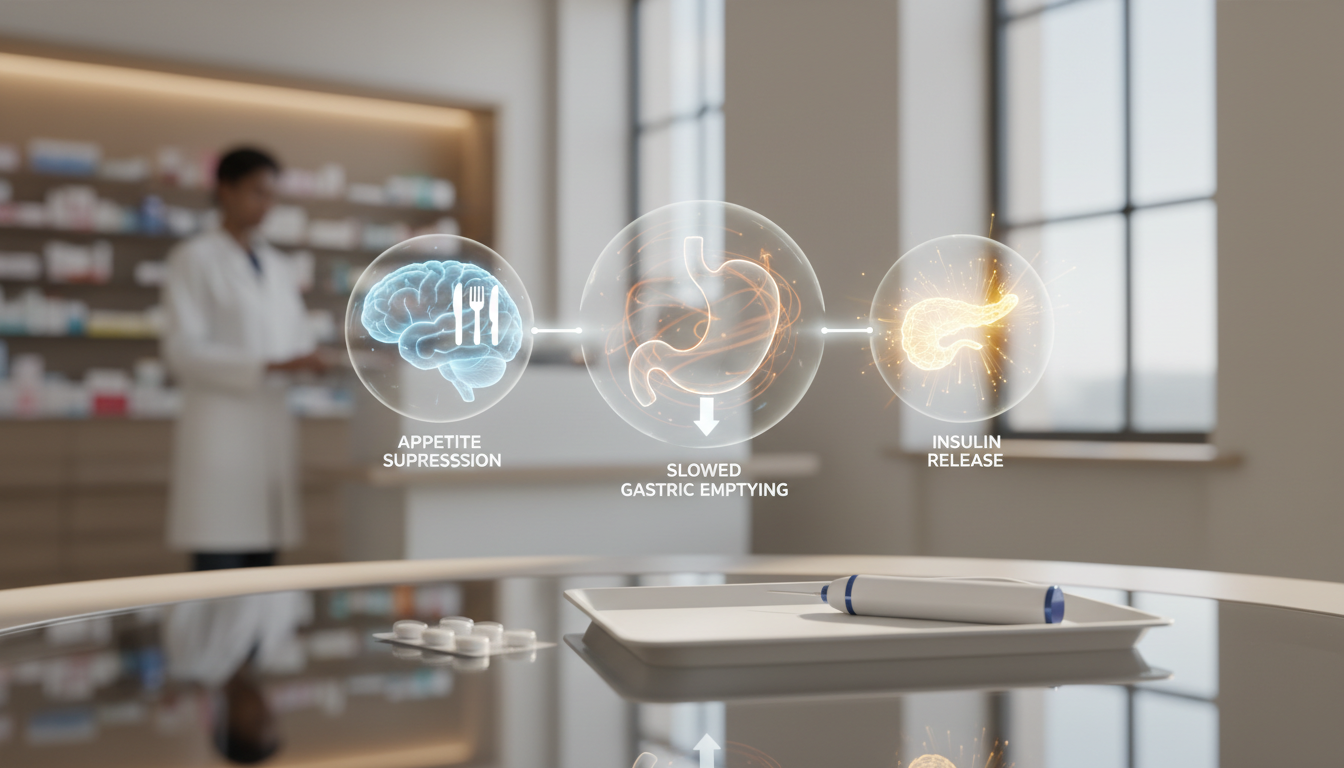
To understand what is GLP-1 for weight loss and why it's so effective, you need to look at its three-pronged mechanism of action. These medications target specific receptors in your brain, stomach, and pancreas to create a powerful effect on appetite and metabolism.
-
It Targets the Brain's Hunger Centers: Your brain has a complex system for regulating hunger and satiety (the feeling of fullness). GLP-1 receptor agonists bind to receptors in areas of the brain, like the hypothalamus, that control appetite. This interaction sends a strong signal to your brain that you are full and satisfied, significantly reducing your desire to eat. This is why many people on these medications report a dramatic decrease in "food noise," the constant, intrusive thoughts about eating.
-
It Slows Down Digestion: The GLP-1 hormone naturally slows down gastric emptying, which is the speed at which food leaves your stomach. The medications do the same thing, but more potently. By keeping food in your stomach for longer, you feel physically fuller for a longer period after a meal. This not only helps you eat smaller portions but also extends the time between meals, naturally reducing your overall calorie intake without feeling deprived. This effect also helps prevent sharp spikes in blood sugar after eating.
-
It Influences Blood Sugar and Insulin: While its direct impact on brain-based hunger is key for weight loss, the original function of GLP-1s was to manage blood sugar. The medication stimulates the pancreas to release insulin when blood sugar levels are high (like after a meal). It also reduces the production of glucagon, a hormone that raises blood sugar. This dual action helps stabilize blood sugar levels, which can prevent the energy crashes and cravings that often lead to overeating.
Combining these three actions creates an ideal environment for weight loss. You're less hungry, you feel full faster and longer, and your body's metabolic processes are better regulated.
Think this might be a good fit for you, but not sure where to start? A qualified provider can help you understand your options. Take our free quiz to get matched with a provider who specializes in weight management.
GLP-1 Effectiveness for Weight Loss and Other Benefits
The main reason for the massive interest in GLP-1 medications is simple: they deliver significant results. The evidence for GLP-1 effectiveness for weight loss is well-established through large-scale clinical trials. Beyond shedding pounds, these medications offer several other compelling health benefits.
H3: Significant, Evidence-Based Weight Loss
Different GLP-1 medications have shown varying, but consistently impressive, levels of weight loss in clinical studies.
- Tirzepatide (Zepbound): As a dual-action agonist that targets both GLP-1 and GIP receptors, Zepbound has shown the highest weight loss results to date. In a head-to-head trial, patients taking Zepbound lost an average of 20% of their body weight over 72 weeks, compared to about 14% for those on Wegovy (san.com, 2026). Some studies show weight loss as high as 22.5% (GLP1 Clinics, 2026).
- Semaglutide (Wegovy): As a single-agonist GLP-1, Wegovy is still highly effective. Studies show an average weight loss of around 14-15% of total body weight over 72 weeks (san.com, 2026).
- Orforglipron (Foundayo): The newest oral option is also delivering meaningful results. The ATTAIN-1 trial showed that individuals on the highest dose lost an average of 12.4%, or 27.3 pounds, over 72 weeks (Eli Lilly and Company, 2026). For many, the convenience of a daily pill is a worthwhile trade-off for the slightly lower percentage compared to top-tier injectables.
These aren't just small changes. For a 220-pound person, a 15% weight loss is 33 pounds, and a 20% loss is 44 pounds. This level of weight reduction can have a profound impact on overall health.
H3: Improved Metabolic Health
Because GLP-1s were first created for diabetes, they excel at improving metabolic markers, even in people without diabetes. The same mechanisms that drive weight loss also contribute to better metabolic function.
A head-to-head trial comparing the new oral medication orforglipron to oral semaglutide in patients with type 2 diabetes highlighted this. Participants on the higher dose of orforglipron saw a superior 2.2% reduction in their A1C (a key measure of long-term blood sugar control) compared to a 1.4% reduction for those on oral semaglutide (Cision, 2026). This demonstrates the powerful effect these drugs have on glucose regulation, which is crucial for reducing the risk of numerous chronic diseases. Improving insulin sensitivity is also a key step to rebalance hormones for weight loss.
H3: Expanding Indications and Cardiovascular Protection
The benefits of GLP-1 medications are expanding beyond just weight and blood sugar. Researchers are finding positive effects on a range of related health conditions. In 2026, experts note that GLP-1s are being explored for indications like:
- Reducing cardiovascular risk
- Managing obstructive sleep apnea
- Treating non-alcoholic fatty liver disease (NAFLD)
(Metabolic Weekly, 2026)
This growing list of benefits suggests that these medications do more than just help you lose weight. They appear to improve overall systemic health, making them a powerful tool for longevity and disease prevention.
Risks and Side Effects of GLP-1 Medications
No effective medication is without potential side effects, and GLP-1s are no exception. The vast majority of side effects are gastrointestinal in nature and tend to be most pronounced when starting the medication or increasing the dose.
The most commonly reported GLP-1 side effects are:
- Nausea: This is the most frequent complaint. In trials for the oral drug Foundayo, nausea was reported by 28.9% to 35.9% of participants, depending on the dose (Eli Lilly and Company, 2026).
- Diarrhea: Also common, affecting 21.0% to 23.1% of Foundayo users.
- Constipation: Some people experience the opposite effect, with constipation reported in 21.7% to 29.8% of participants.
- Vomiting: Less common than nausea but still significant, reported by 13.0% to 24.0%.
For most people, these side effects are mild to moderate and decrease over time as their body adjusts. However, for some, they can be severe enough to stop treatment. Discontinuation rates due to adverse events in one trial for orforglipron ranged from 8.7% to 9.7% (Cision, 2026).
It's also important to be aware of less common but more serious risks, which can include pancreatitis, gallbladder problems, and a risk of thyroid C-cell tumors. These medications are not recommended for people with a personal or family history of medullary thyroid carcinoma or Multiple Endocrine Neoplasia syndrome type 2.
Concerns like "Ozempic face" (facial volume loss due to rapid weight loss) and muscle loss are also discussed. These are generally consequences of significant weight loss itself, not a direct side effect of the drug. A provider can help you create a plan with adequate protein intake and resistance training to minimize these risks. Always discuss your full medical history with your doctor before starting any new medication.
How to Get Started with GLP-1s
Getting started on a GLP-1 medication for weight loss involves a few key steps. As prescription drugs, they require a consultation with a qualified healthcare provider.
- Consult a Provider: Your first step is to talk to a doctor. This could be your primary care physician or a specialist from an online peptide therapy clinic or weight management center. The provider will review your medical history, assess your BMI, and determine if you are an appropriate candidate. Typically, these drugs are prescribed for individuals with a BMI of 30 or greater, or a BMI of 27 or greater with at least one weight-related condition like high blood pressure or high cholesterol.
- Choose the Right Medication and Dose: If you are a good candidate, your provider will discuss the different options. The choice between an injectable like Zepbound or an oral pill like Foundayo will depend on your lifestyle, preferences, treatment goals, and insurance coverage. Your provider will start you on a low dose to help your body acclimate and minimize side effects. The dose is then gradually increased over several weeks or months. For help finding the right provider for you, you can search reputable clinics in your area.
- Learn Administration: Your provider or pharmacist will show you how to administer the medication.
- Injectables like Wegovy and Zepbound are typically self-administered once a week using a simple auto-injector pen. The injection is subcutaneous, meaning just under the skin, usually in the abdomen, thigh, or upper arm.
- Oral Medications like the newly approved Foundayo offer more convenience. Foundayo is a once-daily pill that, unlike previous oral GLP-1s, can be taken any time of day without restrictions on food or water (Scientific American, 2026). This flexibility makes it a very attractive option.
Navigating the different drugs, dosing schedules, and costs can be confusing. To find out which options are the best fit for your specific health profile and budget, a personalized consultation is key.
Our free 3-minute quiz can match you with a vetted provider who can create a plan for you.

Legal Status and FDA Approval in 2026
GLP-1 receptor agonists are federally legal prescription medications. Their use for specific conditions is governed by the U.S. Food and Drug Administration (FDA). The FDA approval status of a drug determines what it can be officially marketed and prescribed for.
In 2026, several GLP-1s are FDA-approved specifically for chronic weight management:
- Semaglutide (Wegovy): The injectable form received FDA approval for weight management in adults. An oral version of semaglutide, previously only for diabetes under the brand name Rybelsus, was approved for weight management in December 2025 (Metabolic Weekly, 2026).
- Tirzepatide (Zepbound): This dual GIP/GLP-1 agonist, which is the same active ingredient in the diabetes drug Mounjaro, is also FDA-approved for weight management.
- Foundayo (orforglipron): This is the newest player to gain approval. Eli Lilly's oral, nonpeptide GLP-1 pill received FDA approval on April 1, 2026, for chronic weight management in adults with obesity or overweight who have at least one weight-related medical problem (PR Newswire, 2026).
It's important to distinguish between FDA-approved uses and "off-label" prescribing. For example, before Wegovy's approval, some doctors prescribed Ozempic (which contains the same drug, semaglutide) off-label for weight loss. While legal, insurance coverage is often more difficult for off-label uses. The increasing number of drugs with official weight management approvals is a positive trend for patient access.
Costs and Accessibility of GLP-1s in 2026
The biggest hurdle for many people interested in GLP-1s is the cost. Without insurance, these medications can be expensive, but pricing models are evolving to improve access.
List prices for a month's supply of brand-name injectables like Wegovy and Zepbound often range from $1,000 to $1,650 (GLP1 Clinics, 2026). However, very few people pay this price.
Here’s a breakdown of what you can expect to pay in 2026:
- Commercial Insurance: If your insurance plan covers weight loss medications, a manufacturer savings card can often bring your monthly copay down significantly, sometimes to as low as $25 for a drug like Foundayo (PR Newswire, 2026).
- Medicare: As of 2026, Medicare Part D still does not cover medications for weight loss alone. However, some plans may cover them if they are prescribed for another condition you have, like diabetes. There is some progress, as eligible Medicare Part D individuals may be able to get Foundayo for as little as $50 per month starting in July 2026 (PR Newswire, 2026).
- Cash-Pay and Telehealth: Recognizing the high demand and coverage gaps, manufacturers and telehealth platforms have introduced more accessible cash-pay options.
- Eli Lilly's new oral medication, Foundayo, is available for a self-pay price starting at $149 per month for the lowest dose (PR Newswire, 2026).
- Oral semaglutide can cost around $550-650 per month on a cash-pay basis (Metabolic Weekly, 2026).
- Many online GLP-1 providers offer subscription models that bundle the medication, consultation, and support for prices ranging from $200 to $400 per month.
- Compounded Options: Some patients also explore compounded semaglutide or tirzepatide as a lower-cost alternative, though it's important to use a reputable and licensed pharmacy.
You can use a GLP-1 cost calculator to estimate your potential expenses based on different medications and coverage scenarios.
Comparing the Options: What is the Best GLP-1 Med for Weight Loss?
With several strong options on the market, many people wonder, "what is the best GLP-1 med for weight loss for me?" The answer depends on your individual priorities: maximum effectiveness, convenience, or cost.
Here’s how the leading medications stack up in 2026:
-
For Maximum Weight Loss: Tirzepatide (Zepbound) If your primary goal is the highest possible percentage of weight loss, the data points to Zepbound. As a dual-agonist targeting both GIP and GLP-1, it has consistently outperformed other medications in studies, leading to an average weight loss of 20% or more (san.com, 2026). If you are comfortable with a weekly injection and your budget or insurance allows, it's the most powerful option available. You can read a detailed comparison of semaglutide vs. tirzepatide here.
-
For Maximum Convenience: Orforglipron (Foundayo) If you dislike needles or want the simplest possible routine, the new oral pill Foundayo is the clear winner. It's a once-daily pill that doesn't require any food or water restrictions. Unlike older oral GLP-1s that had strict rules about when and how to take them, Foundayo fits easily into any schedule. While its average weight loss (12.4%) is lower than Zepbound's, it is still highly effective and offers unmatched convenience (Scientific American, 2026).
-
A Strong, Established Choice: Semaglutide (Wegovy) Wegovy is the medication that brought GLP-1s into the mainstream. It is a highly effective weekly injection that delivers around 14-15% weight loss. It has a long track record of safety and effectiveness and is a reliable choice for many.
Ultimately, the "best" medication is the one that you will take consistently and that fits your health needs and lifestyle. For an in-depth ranking, check out our guide on the best GLP-1 for weight loss for you.
Ready to explore your options with a professional? Take our free 3-minute quiz to get matched with a licensed provider who can help you choose the right path and create a custom treatment plan.
FAQs
Is GLP-1 a peptide?
Yes, most GLP-1 receptor agonists, like semaglutide and tirzepatide, are peptides. They are short chains of amino acids designed to mimic the natural GLP-1 hormone. However, newer drugs like orforglipron (Foundayo) are "nonpeptide small molecules." This different structure allows them to be absorbed through the gut without breaking down, which is why they work so well as oral pills (Scientific American, 2026). You can learn more about if tirzepatide is a peptide or GLP-1 here.
What is the difference between GLP-1 and GIP?
GLP-1 (glucagon-like peptide-1) and GIP (glucose-dependent insulinotropic polypeptide) are both incretin hormones released from the gut after eating. Both help regulate blood sugar and appetite. Medications like semaglutide only target the GLP-1 receptor. Newer drugs like tirzepatide are dual-agonists, meaning they target both GLP-1 and GIP receptors. This dual action is believed to be why tirzepatide often leads to greater weight loss.
Will I regain weight if I stop taking GLP-1s?
GLP-1 medications are designed for chronic weight management, not short-term use. Your body will likely revert to its previous hormonal set points for hunger and metabolism if you stop the medication. Studies have shown that most people regain a significant portion of the weight they lost after discontinuing treatment. It's essential to discuss a long-term strategy with your provider, which should include sustainable lifestyle changes in diet and exercise.
What is the safest GLP-1 medication for weight loss?
All FDA-approved GLP-1s have been rigorously tested for safety. The "safest" one is highly individual and depends on your personal health history. The side effect profiles are very similar across the class, with gastrointestinal issues being the most common. Some people may tolerate one drug better than another. Discussing your full health profile with a doctor is the only way to determine the safest GLP-1 for your weight loss plan.
How quickly do you see weight loss on GLP-1?
Most people begin to see weight loss within the first few weeks of starting a GLP-1 medication, even on the initial low doses. However, the most significant weight loss occurs as the dose is gradually increased over several months. It is a marathon, not a sprint, and maximum results are typically seen after a year or more of consistent treatment.
Contributing to evidence-based peptide education and provider transparency.
Too many clinics, not enough clarity?
We don't sell peptides. Tell us your goals and we'll connect you with a vetted provider who can figure out what actually makes sense for you.
See what's right for youRelated articles
A Step-by-Step Gelatin Recipe for Weight Loss
Seen the viral "pink trick"? We break down the simple gelatin recipe for weight loss. Learn our step-by-step method to help manage hunger and feel full.
GLP-1 Weight LossOzempic Cost in 2026: What You'll Actually Pay
The 2026 Ozempic cost can be anywhere from $25 to over $1,400 a month. Discover why and learn how to find savings with or without insurance coverage.
GLP-1 Weight LossHow Zep Weight Loss Works and What to Expect
Thinking about zep weight loss? We cover how this drug works, what realistic results look like, common side effects, and how it compares to Ozempic.