What Are Low Free Testosterone Levels Symptoms?
Tired all the time? Don't just blame aging. We cover the surprising low free testosterone levels symptoms many people miss and what you can do next.
This content is for informational purposes only and does not constitute medical advice. Always consult a qualified healthcare provider for diagnosis and treatment.
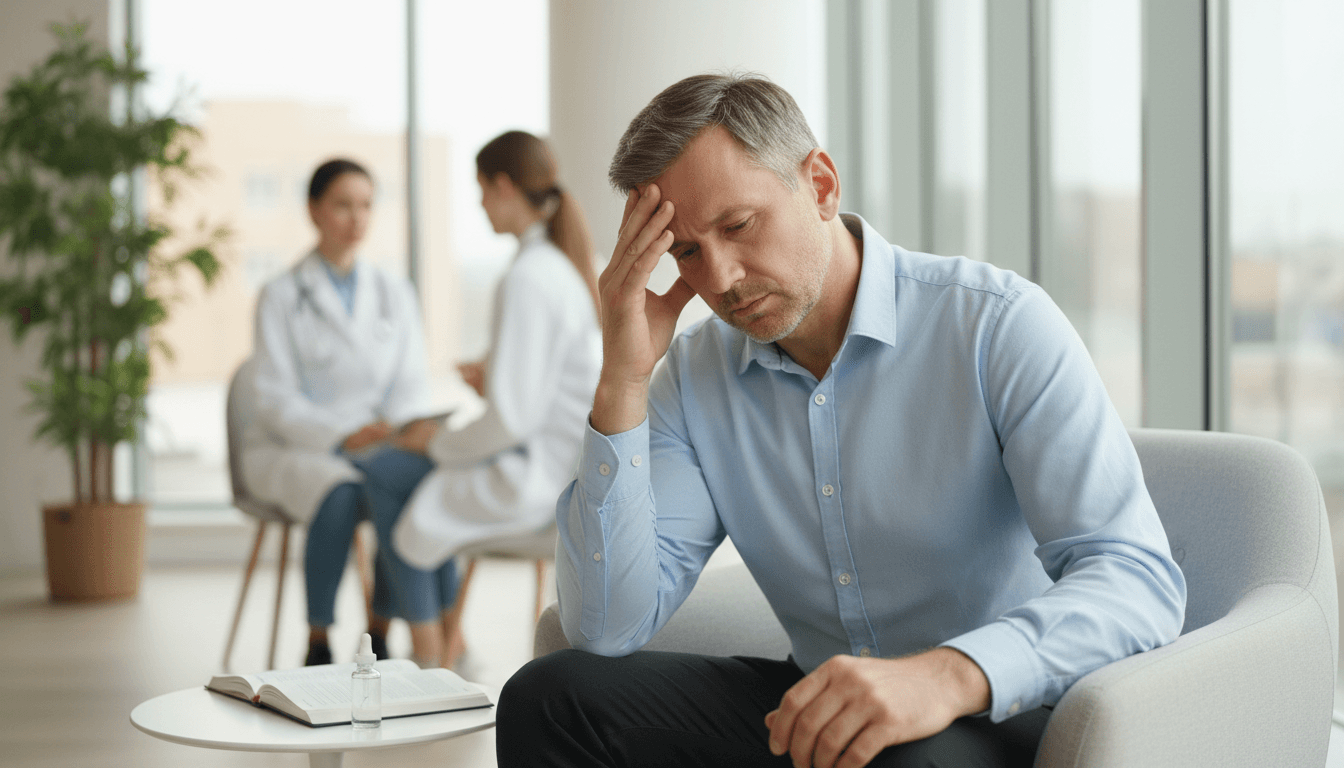
Do you feel "off" but can't pinpoint why? Persistent fatigue, a lagging sex drive, and a general sense of decline are easy to dismiss as just part of getting older. But these issues are often signs of a specific, treatable condition. The problem might not be your age, but your hormones. Specifically, you may be experiencing low free testosterone levels symptoms, a condition that affects nearly one in four men at some point but is widely underdiagnosed (Lola Health). This guide explains what free testosterone is, why it matters more than your total level, and what steps you can take to feel like yourself again.
What Is Low Free Testosterone?
Low free testosterone is a condition where the amount of biologically active testosterone circulating in your blood is below the healthy range. While total testosterone gets most of the attention, free testosterone is the form that actually binds to receptors in your cells to exert its effects, from building muscle to maintaining sex drive.
Your body produces testosterone, but most of it isn't immediately available. The majority gets bound to two proteins: sex hormone-binding globulin (SHBG) and albumin. Only a small fraction, typically just 2-3% of your total testosterone, remains unbound or "free" (SiPhox Health). This tiny percentage is what truly drives male characteristics and physiological functions.
A man can have a "normal" total testosterone reading but still suffer from clinically low free testosterone levels symptoms. This happens when SHBG levels are high, binding up too much testosterone and leaving very little free for your body to use. Research confirms this is a common issue. A major study in the Journal of Clinical Endocrinology & Metabolism found that men with low free testosterone, even with normal total testosterone, reported significantly more symptoms of androgen deficiency (academic.oup.com). This is why measuring only total testosterone can miss up to 20% of cases of actual testosterone deficiency, according to the British Society for Sexual Medicine (Lola Health).
The Science Behind Free Testosterone: Why It Matters More
To understand why free testosterone is so critical, think of your total testosterone as a full warehouse of goods. The goods are only useful once they're loaded onto delivery trucks and sent out. In this analogy, SHBG and albumin are the storage containers keeping the goods locked away. Free testosterone is the product on the active delivery trucks, ready to be used by your body's cells.
The mechanism is straightforward. Testosterone circulates in the bloodstream. SHBG, a protein produced mainly in the liver, has a high affinity for testosterone and latches onto it tightly. Testosterone bound to SHBG is essentially inactive; it cannot enter cells or activate androgen receptors. A smaller amount is loosely bound to albumin and can more easily become free. The remaining 2-3% is completely free.
As men age, two things often happen simultaneously. First, total testosterone production naturally declines by about 1% per year after age 30 (SiPhox Health). Second, SHBG levels tend to increase. This combination creates a "double-whammy" effect, drastically reducing the amount of usable free testosterone. This is why a man of 50 can have the same total testosterone level as he did at 30 but feel significantly worse. His rising SHBG has effectively lowered his functional testosterone.
This condition, known as hypogonadism, can be primary (an issue with the testicles) or secondary (an issue with the brain's signaling via the hypothalamus or pituitary gland) (montefioreeinstein.org). Factors that can elevate SHBG and lower free testosterone include:
- Aging
- Liver disease
- Hyperthyroidism
- Certain medications
- Low-calorie or restrictive diets
Because of this complex interaction, relying solely on a total testosterone test is like taking inventory of the warehouse but never checking how many trucks are on the road. The most important metric for how you feel and function is the amount of active, free testosterone available to your body.
Not sure if your symptoms point toward a hormonal issue? Our free quiz can help you understand your situation and connect you with a provider who specializes in hormone health. Take our 3-minute quiz to get started.
Identifying the Low Free Testosterone Levels Symptoms
The symptoms of low free testosterone are often subtle at first and can be easily mistaken for stress or the normal aging process. However, around 40% of men over 45 experience them (PeakedLabs). A recent UK survey found that while nearly half of men showed a high likelihood of testosterone deficiency based on their symptoms, less than 5% had a formal diagnosis (bmjopen.bmj.com).
Recognizing these signs is the first step toward getting help. Here are the most common low free testosterone levels symptoms to watch for:
- Persistent Fatigue and Low Energy: This isn't just feeling tired after a long day. It's a chronic lack of energy that doesn't improve with rest.
- Reduced Libido (Sex Drive): A noticeable drop in your interest in sex is one of the most frequently reported symptoms. In the UK survey, 31% of men reported low libido (bmjopen.bmj.com).
- Erectile Dysfunction (ED): Difficulty achieving or maintaining an erection is a key physical sign. A study in the European Male Ageing Study directly linked low free testosterone to less frequent morning erections and higher rates of ED, even when total testosterone was normal (pmc.ncbi.nlm.nih.gov).
- Loss of Muscle Mass and Strength: You may find it harder to build or maintain muscle, even with regular workouts.
- Increased Body Fat: A shift in body composition, particularly an increase in abdominal fat, is common.
- Mood Changes: Irritability, mood swings, feelings of sadness, or a general lack of motivation can be linked to low hormonal levels.
- Brain Fog and Poor Concentration: Difficulty focusing, remembering things, and feeling mentally sluggish are classic cognitive symptoms.
- Decreased Bone Density: Over time, low testosterone can lead to weaker bones and an increased risk of osteoporosis.
- Sleep Disturbances: Difficulty falling asleep, staying asleep, or experiencing poor sleep quality.
- Reduced Body and Facial Hair Growth: A noticeable thinning or slower growth of hair.
- Gynecomastia: Development of breast tissue in men.
If you recognize five or more of these signs and they have persisted for more than a month, it's a strong indicator that you should look into getting your hormone levels checked (PeakedLabs).

The Benefits of Optimizing Your Levels
Confirming you have low testosterone is only half the battle. The good news is that treatment, most commonly testosterone replacement therapy (TRT), is highly effective at reversing these symptoms and improving quality of life. Research supports significant improvements in men with confirmed hypogonadism who undergo therapy (trtnyc.com). Here are the evidence-based benefits of restoring your free testosterone to a healthy range.
H3: Revitalized Energy and Mood
One of the first changes men often report on TRT is a return of their energy and vitality. The chronic fatigue that plagues daily life begins to lift, replaced by a renewed sense of vigor. This extends to mental well-being too. Studies and clinical experience show that normalizing testosterone levels can alleviate irritability, reduce depressive symptoms, and foster a more stable, positive mood. You feel more motivated, engaged, and resilient to daily stressors. For more on what to expect, read our guide on what to expect with testosterone treatment in males.
H3: Improved Sexual Function
Low testosterone is a direct cause of sexual dysfunction, and TRT is a direct solution. Men undergoing treatment typically experience a significant boost in their libido, or sex drive. Beyond desire, TRT often improves erectile quality and frequency, including the return of spontaneous morning erections (pmc.ncbi.nlm.nih.gov). For many men, restoring healthy sexual function is one of the most life-changing aspects of therapy.
H3: Enhanced Physical Composition
If you've been frustrated by a loss of muscle and an increase in stubborn body fat, hormone optimization can help. Testosterone plays a central role in metabolism and body composition. TRT promotes the growth of lean muscle mass (especially when combined with resistance training) and helps reduce fat mass, particularly visceral fat around the abdomen. This leads not only to a better physique but also to improved metabolic health.
H3: Sharper Cognitive Function
The "brain fog" associated with low free testosterone is real, and so is the mental clarity that comes with treatment. Men on TRT often report improved focus, better memory, and quicker thinking. The feeling of being mentally sluggish is replaced by a sharper, more decisive cognitive state. This benefit allows you to perform better at work and feel more present and engaged in your personal life.
What Are the Risks and Side Effects of Treatment?
While the benefits of TRT are substantial, it is a medical treatment that carries potential risks and side effects that must be managed with a qualified provider. A transparent discussion about the downsides is essential for making an informed decision.
The most common side effect to monitor is an increase in red blood cell count, a condition called polycythemia or erythrocytosis. This can thicken the blood and increase the risk of clotting. Regular blood work is necessary to monitor hematocrit levels, and management strategies like therapeutic phlebotomy (blood donation) may be required.
Other potential side effects can include:
- Acne or oily skin: An increase in testosterone can sometimes stimulate sebaceous glands.
- Suppression of natural testosterone production: Exogenous testosterone signals your body to stop its own production. This is why it's crucial not to stop TRT abruptly and to discuss long-term plans with your doctor.
- Infertility: TRT suppresses sperm production. Men who wish to preserve fertility should discuss options like HCG (Human Chorionic Gonadotropin) with their provider.
- Prostate health: While the link between TRT and prostate cancer has been largely debunked, it's still standard practice to monitor PSA (prostate-specific antigen) levels. TRT can stimulate the growth of an existing prostate cancer, so screening is important.
- Fluid retention: Some men may experience mild fluid retention, especially at the beginning of therapy.
Many of these side effects are dose-dependent and can be managed by adjusting your protocol. For a deeper look, you can explore our article on the downsides of TRT. Working with an experienced clinic that provides ongoing monitoring is the best way to ensure your treatment is both safe and effective.
Wondering what treatment path fits your goals, budget, and health profile? Take our free 3-minute quiz to get matched with vetted providers who can create a plan for you.
How to Get Started with Diagnosis and Treatment
If you suspect you have low free testosterone levels symptoms, the path to diagnosis and treatment is clear and straightforward. Here is a step-by-step guide.
-
Get Tested Correctly: The most critical step is getting the right blood test. As established, testing for total testosterone alone is not enough. You need a comprehensive hormone panel that measures, at a minimum:
- Total Testosterone
- Free Testosterone
- Sex Hormone-Binding Globulin (SHBG)
- You can learn more about how to do this in our guide on how to get testosterone tested. For accurate results, the blood draw must be done in the morning between 7 AM and 11 AM, as testosterone levels are highest then (Lola Health). It's also often recommended to be fasting. A diagnosis of clinical hypogonadism typically requires two separate low readings to confirm the result (Formblends).
-
Understand Your Results: Interpreting your lab work is key. Diagnostic thresholds can vary slightly, but general guidelines from medical societies are helpful. The British Society for Sexual Medicine defines low T as total testosterone under 12 nmol/L or free testosterone under 0.225 nmol/L in symptomatic men (Lola Health). The American Urological Association often uses a total testosterone level under 300 ng/dL as a cutoff (trtnyc.com). However, the context of your symptoms is paramount. Our resource on testosterone serum levels can help you make sense of your report.
-
Consult with a Specialist: Once you have your lab results, the next step is to consult a physician who specializes in hormone optimization. This could be a urologist, an endocrinologist, or a provider at a dedicated men's health or TRT clinic. Telehealth platforms have made this more accessible than ever, with many excellent online doctors that prescribe testosterone in the US. These clinics understand the importance of free testosterone and symptom-based care.
-
Discuss Treatment Options: If you are diagnosed with hypogonadism, your provider will discuss treatment options. The standard is TRT, which can be administered via:
- Injections: The most common and cost-effective method.
- Gels: Applied daily to the skin.
- Patches: Worn on the skin and changed daily.
- Pellets: Implanted under the skin every few months.
When it comes to how much testosterone on TRT is appropriate, there is no one-size-fits-all answer. Your doctor will determine a starting dose based on your lab values, age, and symptoms, and adjust it based on follow-up blood work. Dosing is highly individual. Some men may feel great on a certain protocol, while others need adjustments. For example, wondering is 0.5 mL of testosterone a week enough? It depends entirely on the concentration and the individual's response. Your provider may also discuss adjunctive therapies like peptides that can support your goals.

Legal Status and FDA Approval
It's essential to understand the legal and regulatory framework surrounding testosterone therapy. In the United States, testosterone is classified as a Schedule III controlled substance. This means it has an accepted medical use but also a potential for abuse. You cannot purchase testosterone legally without a valid prescription from a licensed healthcare provider who has diagnosed you with a legitimate medical condition, such as hypogonadism.
Testosterone replacement therapy is FDA-approved for the treatment of confirmed primary and secondary hypogonadism. This approval is based on decades of research demonstrating its safety and efficacy for this specific indication.
However, the FDA has not approved testosterone for treating age-related decline in men who do not meet the clinical definition of hypogonadism. This is why proper diagnosis through blood work and symptom assessment is not just a best practice—it's a legal requirement.
Any source selling testosterone without a prescription is operating illegally and should be avoided. These products are unregulated, may not contain what they claim, and could be unsafe. The only safe and legal way to obtain TRT is through a licensed physician and a legitimate pharmacy. To contrast this with another popular therapy, you can read about peptide therapy and its FDA approval status.
FAQs
How do I know if my fatigue is from low testosterone?
While many things can cause fatigue, the fatigue from low testosterone is often persistent and doesn't improve with a good night's sleep. It's usually accompanied by other symptoms like low libido, mood changes, and brain fog. The only way to know for sure is to get a blood test that measures your total and free testosterone levels.
Can I have low free testosterone levels symptoms with normal total T?
Yes, absolutely. This is a central point of confusion for many men. Your total testosterone can be within the normal lab range, but if your SHBG (sex hormone-binding globulin) is high, it can bind up most of your testosterone, leaving you with low "free" or usable testosterone. This is why it is critical to test for both values. Multiple studies have confirmed that men with normal total T but low free T show more hypogonadal symptoms (pubmed.ncbi.nlm.nih.gov).
What is a good free testosterone level for my age?
Optimal free testosterone ranges can vary, but generally, a healthy young male has a free testosterone level in the upper end of the lab's reference range. For many labs, a good target for men on TRT is often in the top quartile of the standard range, for instance, over 15-20 ng/dL. However, the goal of therapy is to alleviate symptoms, so your optimal level is the one at which you feel your best, which should be determined with your doctor.
How much testosterone on TRT is a typical starting dose?
A common starting dose for testosterone cypionate injections is 100 mg to 120 mg per week, often split into two smaller injections to maintain stable blood levels. However, this is just a starting point. Your provider will adjust the dose based on your follow-up blood work and symptom response. Some men may need more, and some may need less. Personalized care is key.
How long does it take to feel the benefits of TRT?
Some benefits, like improved libido and mood, can be felt within the first 3-6 weeks. Other benefits, such as changes in body composition like increased muscle mass and decreased fat, take longer and are typically more noticeable after 3-6 months of consistent therapy and lifestyle support.
Is it possible to increase free testosterone naturally?
Yes, certain lifestyle changes can help support healthy testosterone levels. These include maintaining a healthy weight, engaging in regular resistance training, getting adequate sleep, managing stress, and ensuring a nutrient-dense diet with enough zinc and vitamin D. While these methods can help, they may not be sufficient to correct clinically low levels of testosterone, which often require medical intervention. It's also worth noting there is a difference between optimizing in the normal range and treating a deficiency. You can also explore our post on the opposite issue of high testosterone symptoms.
Ready to stop guessing and start addressing the root cause of your symptoms? The first step is to connect with a qualified professional. Take our free 3-minute quiz to get matched with a licensed provider who can guide you through diagnosis and create a treatment plan that works for you.
Contributing to evidence-based peptide education and provider transparency.
Too many clinics, not enough clarity?
We don't sell peptides. Tell us your goals and we'll connect you with a vetted provider who can figure out what actually makes sense for you.
See what's right for youRelated articles
Which Protein Supplements for Muscle Growth Actually Work?
Tired of the hype? Find out which protein supplements for muscle growth are backed by science and learn how to pick the right one for your goals.
Hormone TherapyWhat Are the Real Magnesium Glycinate Benefits?
Uncover the science-backed magnesium glycinate benefits. We explore its effects on sleep, stress, and muscle function and explain why it's a top choice.
Hormone TherapyWhat B12 Shot Benefits Can You Actually Expect?
B12 shots are often hyped for energy, but the real b12 shot benefits are more specific. Learn who is a true candidate and what results to expect.