High Testosterone Men Symptoms You Shouldn't Ignore
More testosterone isn't always better. We explain the often-overlooked high testosterone men symptoms, from aggression to serious health risks.

This content is for informational purposes only and does not constitute medical advice. Always consult with a qualified healthcare provider for any health concerns or before making any decisions related to your health or treatment.
When you think of testosterone, you might picture peak male vitality. While healthy testosterone levels are crucial for a man's well-being, the idea that "more is always better" is a dangerous myth. In fact, understanding high testosterone men symptoms is just as important as recognizing the signs of deficiency. Too much testosterone, especially from external sources, can cause a range of unwanted and potentially harmful effects.
This guide will walk you through everything you need to know about high testosterone in 2026. We will cover the signs, causes, and the critical difference between optimized levels and supraphysiologic (abnormally high) levels.
What is High Testosterone in Men?
High testosterone, or hyperandrogenism, occurs when a man’s body has an excess of testosterone circulating in the bloodstream. While the "normal" range can vary slightly between labs, a total testosterone level is typically considered high when it exceeds 800-1,100 nanograms per deciliter (ng/dL). It's important to distinguish between levels that are naturally high and those that are artificially elevated.
Truly natural high testosterone is quite rare. Research suggests that only about 4% of men naturally have testosterone levels over 800 ng/dL. For this small group, these levels are not typically associated with major health problems (Dr-Oracle.ai). The real concern arises with supraphysiologic levels, which are almost always caused by external sources like testosterone replacement therapy (TRT) or anabolic steroid use. These levels can climb far above the natural upper limit, leading to the distinct high testosterone men symptoms that signal a hormonal imbalance.
While many men explore hormone therapy due to concerns about testosterone deficiency, it's crucial to work with a provider who understands how to achieve balance, not just push numbers as high as possible.
What Causes High Testosterone Men Symptoms and Levels?
The symptoms of high testosterone almost never appear out of nowhere. They are a direct result of hormone levels rising beyond the healthy, optimal range. The cause is most often exogenous, meaning it comes from outside the body.
Here are the most common culprits:
- Testosterone Replacement Therapy (TRT): When prescribed for clinically low testosterone, TRT aims to restore levels to a healthy range. However, if the dosage is too high, administered too frequently, or not properly monitored with regular blood work, levels can overshoot the target. This can lead to the very symptoms a patient is trying to avoid. Careful monitoring and dose adjustments are key to successful therapy.
- Anabolic Steroid Use: This is a primary cause of dangerously high testosterone. Anabolic steroids used for performance enhancement can contain 10 to 30 times the amount of testosterone found in a prescribed TRT dose (Hone Health). This massive influx overwhelms the body's natural systems, causing severe side effects and long-term health risks. It's important to understand that medically supervised TRT is not the same as using anabolic steroids.
- Rare Medical Conditions: In very few cases, high testosterone can be caused by an underlying medical issue. Conditions like congenital adrenal hyperplasia or tumors on the testicles or adrenal glands can cause the body to overproduce testosterone (Dr-Oracle.ai). These are uncommon and require a thorough medical diagnosis.
If you are on hormone therapy and experiencing negative side effects, you might be wondering if your levels are off. It's often difficult to self-diagnose. Not sure if what you're feeling is normal? Take our free quiz to get matched with a provider who can help you interpret your symptoms and review your treatment plan.
Physical and Psychological Signs: A Closer Look at High Testosterone Men Symptoms
When testosterone levels become supraphysiologic, the body sends clear signals that something is wrong. These signs can be external and visible, psychological, or hidden within your internal health markers.
Physical Signs of High Testosterone in a Man
Some of the most noticeable symptoms appear on your skin, hair, and physique. These are often the first clues that your hormone levels may be too high.
- Acne and Oily Skin: Androgens like testosterone stimulate the sebaceous glands in your skin. When levels are too high, these glands go into overdrive, producing excess oil that can clog pores and lead to acne breakouts, particularly on the face, back, and chest (TRT Clinic Guide).
- Accelerated Hair Loss: High testosterone can increase the conversion to dihydrotestosterone (DHT), a potent androgen strongly linked to male pattern baldness. If you're genetically predisposed to hair loss, supraphysiologic testosterone levels can speed up the process.
- Increased Body Hair: While a sign of virility in normal amounts, excessive and rapid growth of body hair, a condition known as hirsutism, can be a sign of androgen excess. A 2025 study noted that signs of androgen excess, including hirsutism, are prevalent across the population and require careful evaluation (PubMed).
- Rapid Muscle Gain: While many see this as a benefit, muscle growth that is unusually rapid can be a sign that testosterone levels are in the supraphysiologic, anabolic-steroid range rather than a healthy, optimized one.
- Testicular Atrophy: This may seem counterintuitive, but when the body detects a large amount of external testosterone, it shuts down its own production. The Leydig cells in the testicles stop producing testosterone, which can cause the testicles to shrink.
- Sleep Apnea: Elevated testosterone levels have been linked to the worsening or development of sleep apnea, a condition where breathing repeatedly stops and starts during sleep.
Psychological and Internal Symptoms
The effects of high testosterone are not just skin deep. Your mood, sex drive, and internal health can be significantly impacted.
- Mood Swings and Irritability: While low T is linked to depression, very high T is often associated with increased aggression, irritability, and "roid rage" mood swings (Hone Health). This emotional volatility can strain personal and professional relationships.
- An Overactive Libido: Does high testosterone increase libido? Absolutely. It can drive it to a point where it becomes distracting or unmanageable. The goal of hormone optimization is a healthy sex drive, not one that is in constant overdrive.
- Difficulty Sleeping: Many men with overly high testosterone report insomnia or poor-quality sleep, which can contribute to mood issues and daytime fatigue.
Internal Health Markers
Some of the most serious physical signs of high testosterone in a man are invisible and can only be detected through blood work.
- Erythrocytosis (Thickened Blood): Testosterone stimulates the production of red blood cells. At high levels, this can cause the blood to become too thick, increasing the risk of blood clots, stroke, or heart attack. This is why hematocrit is a critical marker to monitor during TRT.
- Infertility: The same mechanism that causes testicular atrophy also shuts down sperm production (spermatogenesis). Supraphysiologic testosterone levels are a known cause of male infertility (Hone Health).
- High Blood Pressure: The FDA updated its labeling for testosterone products in 2025 to include a warning about potential increases in blood pressure, a known cardiovascular risk factor (Medical Foundation of NC).
- Unhealthy Cholesterol Changes: High doses of testosterone can negatively impact your lipid profile, lowering "good" HDL cholesterol and potentially raising "bad" LDL cholesterol.
Testosterone Deficiency vs. High Testosterone: Understanding the Balance
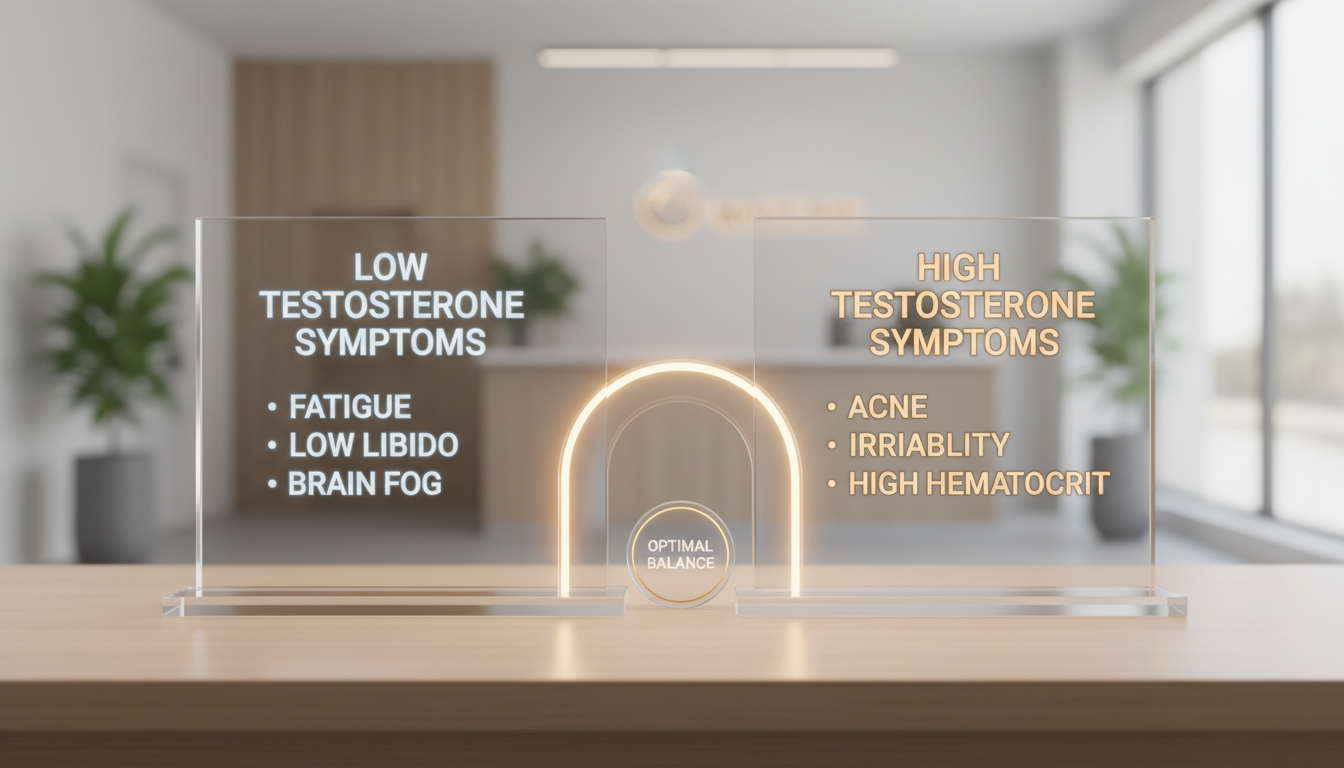
Most of the conversation around men's hormones focuses on "low T," or testosterone deficiency (TD). The symptoms of TD are often the complete opposite of high testosterone symptoms. A 2025 UK survey revealed how common this is, finding that nearly half of men reported symptoms consistent with TD, yet only 5% had a diagnosis. The most common complaints were low libido (31%) and reduced erectile strength (27%) (BMJ Open).
Common testosterone deficiency in men symptoms include:
- Persistent fatigue and low energy
- Reduced sex drive (libido)
- Erectile dysfunction
- Loss of muscle mass and strength
- Increased body fat, especially around the midsection
- Depressed mood or irritability
- Brain fog and difficulty concentrating
These issues are particularly common in aging men, with one estimate suggesting 8.4% of men aged 50-79 have clinical TD (Endocrine Society). The same symptoms can also appear as signs of low testosterone in young men, though it's less common. This contrast highlights the importance of balance. The goal of hormone therapy isn't to max out your levels, but to alleviate the symptoms of deficiency and bring you into an optimal range where you feel and function your best.
The Role of TRT: What Does Taking Testosterone Do for Men?
When a man is diagnosed with clinical hypogonadism (low testosterone) and is experiencing symptoms, Testosterone Replacement Therapy (TRT) can be a profoundly effective treatment. So, what does taking testosterone do for men who truly need it? When managed correctly, it reverses the symptoms of deficiency and helps restore vitality.
According to 2026 clinical observations, the evidence-based benefits of properly monitored TRT include:
- Improved Energy and Vitality: One of the first changes men often report is a return of their energy and a reduction in chronic fatigue.
- Restored Libido and Sexual Function: TRT can significantly improve sex drive and erectile function in men whose issues were caused by low T.
- Better Body Composition: Testosterone helps build and maintain lean muscle mass while also aiding in fat metabolism. Men on TRT often find it easier to lose fat and gain muscle.
- Enhanced Mood and Cognitive Function: Many men experience a lifting of depressive symptoms and an improvement in focus and mental clarity.
- Increased Bone Density: Testosterone plays a role in bone health, and therapy can help protect against osteoporosis.
- Support for Anemia: In some men, TRT can help resolve certain types of anemia by stimulating red blood cell production (Boreal.org).
Is TRT worth it? For many men with a legitimate medical need, the answer is a clear yes. However, achieving these positive side effects of TRT depends entirely on working with a knowledgeable provider who prioritizes safe, optimal dosing.
Wondering if your symptoms point toward low testosterone and if therapy could be right for you? Our free 3-minute quiz can help you understand your options and connect you with a vetted provider who specializes in hormone optimization.
Risks and Side Effects of Testosterone Therapy in 2026
For years, a cloud of concern hung over TRT, particularly regarding cardiovascular risk. However, the medical landscape has shifted significantly. In February 2025, the FDA took the major step of removing the "black box" warning from testosterone products. This decision was based on the landmark TRAVERSE trial, a large-scale study that provided much-needed clarity.
The trial found that in men aged 45-80 with pre-existing cardiovascular risk, TRT did not lead to a higher rate of major adverse cardiac events compared to a placebo. The incident rate was actually slightly lower in the TRT group (7.0%) than in the placebo group (7.3%) (Medical Foundation of NC). This finding, supported by other large trials, has given the medical community renewed confidence in the heart safety of TRT when prescribed and monitored appropriately (Boreal.org).
However, "safer" does not mean "without risk." The FDA's updated labeling now includes a specific warning about potential increases in blood pressure, underscoring the need for routine monitoring. Other potential downsides of TRT that your provider will monitor for include:
- Erythrocytosis: As mentioned, this is an increase in red blood cell count that can thicken the blood. It is manageable with dose adjustments or therapeutic phlebotomy.
- Changes in Cholesterol: Your lipid profile should be checked regularly.
- Acne or Oily Skin: These can often be managed with dose adjustments or topical treatments.
- Suppression of Natural Production: This is an expected effect of therapy and is a key reason why TRT is considered a long-term commitment.
A 2026 retrospective study of over 9,000 men on testosterone therapy continues to add to the real-world evidence, reinforcing the importance of structured monitoring protocols to manage these potential side effects effectively (Scilit).
How to Get Started with Testosterone Therapy and Ensure Safe Levels
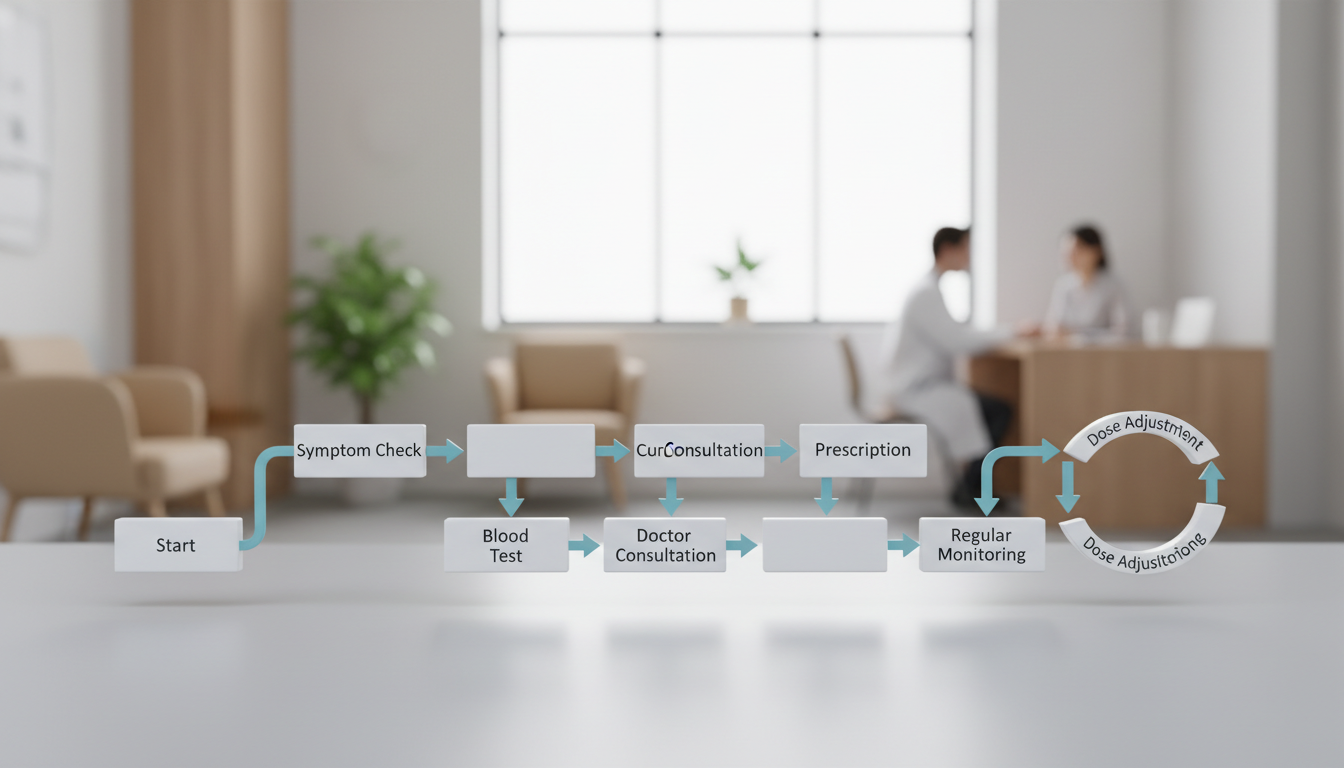
If you suspect you have a hormone imbalance, whether low or high, the path forward involves a systematic medical process. Self-diagnosing or self-treating is risky and ineffective.
- Symptom Assessment: The first step is to take stock of how you feel. Are you experiencing fatigue, low libido, and brain fog? Or are you dealing with acne, irritability, and sleep problems? You can use a free online tool like our Hormone Symptom Checker to get a preliminary idea.
- Comprehensive Blood Testing: Symptoms alone are not enough for a diagnosis. You need blood work. Learning how to get your testosterone tested is simple. Your doctor can order a lab panel, or you can even use an at-home testosterone testing kit for initial screening. It is crucial to have your blood drawn in the morning, typically between 7 AM and 10 AM, because this is what time of day are testosterone levels highest. A comprehensive panel should include Total Testosterone, Free Testosterone, Estradiol (E2), and a Complete Blood Count (CBC) to check hematocrit.
- Consultation with a Provider: Once you have your lab results, you need to discuss them with a qualified medical provider. They will interpret the results in the context of your symptoms to make an accurate diagnosis. You can find specialized providers at local or online testosterone therapy clinics.
- Treatment and Monitoring: If TRT is prescribed, it can be administered via testosterone injections, gels, or pellets. Your provider will start you on a conservative dose and schedule follow-up blood work every few months to ensure your levels are in the optimal range and to monitor for any side effects. This ongoing monitoring is the key to avoiding high testosterone men symptoms.
Legal Status and FDA Approval in 2026
In the United States, testosterone is classified as a Schedule III controlled substance. This means it has an accepted medical use but also a potential for abuse and dependence. You cannot legally purchase testosterone without a valid prescription from a licensed healthcare provider following a diagnosis of a condition like male hypogonadism.
The FDA approves various testosterone formulations, like testosterone cypionate and gels, specifically for treating this medical condition. The agency's role is to ensure these products are safe and effective for their intended use. The 2025 label update, removing the cardiovascular black box warning and adding a note on blood pressure, is a perfect example of the FDA adjusting its guidance based on new, high-quality scientific evidence.
It's critical to differentiate between legal, prescribed TRT and the illegal acquisition and use of anabolic-androgenic steroids (AAS). Buying testosterone from unregulated online sources or a "guy at the gym" is not only illegal but also incredibly dangerous. These products are not manufactured to pharmaceutical standards, may not be sterile, and their actual dosage is unknown, drastically increasing the risk of both acute and long-term health consequences.
Ready to explore your options the right way? Take our free 3-minute quiz to get matched with a licensed, vetted provider in your state who can guide you through the proper diagnostic and treatment process.
Frequently Asked Questions
What are the first signs of high testosterone?
The earliest signs of high testosterone often include physical changes like oily skin and acne (especially on the back and shoulders), along with psychological symptoms like increased irritability, agitation, or a noticeably higher, sometimes distracting, sex drive.
Does high testosterone increase libido?
Yes, high testosterone levels will almost always increase libido. However, supraphysiologic levels can push libido to an excessive and unmanageable point. The goal of hormone optimization is to achieve a healthy, normal sex drive, not an overactive one.
What level is considered high testosterone in men?
Generally, a total testosterone level over 1,100 ng/dL is considered high. While a few men (about 4%) can have naturally high levels over 800 ng/dL without issue, most cases of symptomatic high testosterone involve levels far exceeding the normal physiological range due to external sources like TRT or steroids.
Can you have high testosterone naturally?
Yes, it is possible but very rare. Most men's natural testosterone production is tightly regulated by the body's endocrine system. The overwhelming majority of cases involving symptoms from high testosterone are caused by testosterone administered externally.
How do you fix high testosterone?
The solution depends entirely on the cause. If it's caused by TRT, a provider will adjust the dose or frequency of administration. If it's from anabolic steroid use, the use must be stopped under medical supervision. If it's caused by a rare medical condition like a tumor, that underlying condition must be treated. Always consult a doctor to determine the cause and appropriate treatment.
What time of day are testosterone levels highest?
For most men, testosterone levels follow a diurnal rhythm. They peak in the early morning, usually between 7:00 AM and 10:00 AM, and are at their lowest in the late afternoon or evening. This is why doctors insist on morning blood draws for accurate hormone testing.
Contributing to evidence-based peptide education and provider transparency.
Too many clinics, not enough clarity?
We don't sell peptides. Tell us your goals and we'll connect you with a vetted provider who can figure out what actually makes sense for you.
See what's right for youRelated articles
Which Protein Supplements for Muscle Growth Actually Work?
Tired of the hype? Find out which protein supplements for muscle growth are backed by science and learn how to pick the right one for your goals.
Hormone TherapyWhat Are the Real Magnesium Glycinate Benefits?
Uncover the science-backed magnesium glycinate benefits. We explore its effects on sleep, stress, and muscle function and explain why it's a top choice.
Hormone TherapyWhat B12 Shot Benefits Can You Actually Expect?
B12 shots are often hyped for energy, but the real b12 shot benefits are more specific. Learn who is a true candidate and what results to expect.