Are the Testosterone Benefits for Females Worth the Risks?
Curious about testosterone therapy for women? We explore the testosterone benefits for females—from energy to libido—and discuss potential side effects.

This content is for informational purposes only and does not constitute medical advice.
Understanding Testosterone's Role in Women's Health
When most people hear "testosterone," they think of men, muscles, and deep voices. But this hormone is just as critical for women's health and vitality. The discussion around testosterone benefits for females is growing as more women and their doctors recognize its importance for everything from energy levels to sexual health. While women produce much less testosterone than men, it plays a vital role in maintaining mood, muscle mass, bone density, and libido.
As women age, their testosterone levels naturally decline. This process starts around age 30 and accelerates during perimenopause and menopause. This drop can lead to frustrating symptoms like persistent fatigue, brain fog, weight gain, and a noticeable loss of sexual desire. For years, these issues were often dismissed as an unavoidable part of aging. Today, we understand that optimizing low testosterone levels under medical supervision can offer significant relief.
This guide will walk you through the real, evidence-based testosterone benefits for females in 2026. We will cover the primary benefits supported by science, what the research says about safety and dosing, how treatment for women differs from men, and how to work with qualified testosterone optimization therapy doctors to see if it's the right choice for you.
The Science-Backed Testosterone Benefits for Females
While research is ongoing, a growing body of evidence points to several key areas where testosterone optimization can make a difference for women. The benefits range from well-established improvements in sexual health to promising effects on overall well-being.
Enhanced Libido and Sexual Function
The most well-documented benefit of testosterone therapy for women is the treatment of hypoactive sexual desire disorder (HSDD), especially in postmenopausal women. HSDD is characterized by a persistent and distressing lack of interest in sex. The 2019 Global Consensus Position Statement, an agreement endorsed by eleven international medical societies, confirmed that testosterone is an effective treatment for HSDD in this group (HealthHighRoad, TRT Catalog).
Studies show that restoring testosterone to the upper end of the normal physiological range can significantly improve sexual desire, arousal, and satisfaction. A review by Women's Health Magazine noted that on average, women undergoing therapy experience about one additional satisfying sexual event per month compared to those on a placebo. While that might not sound dramatic, for someone with zero desire, it represents a meaningful improvement in quality of life. The therapy works by directly influencing the parts of the brain responsible for sexual motivation and arousal (Cedars-Sinai).
Improved Energy, Mood, and Cognitive Function
Beyond the bedroom, many women report significant improvements in other areas. While the evidence here is considered less definitive than for HSDD, it is compelling. Many women on properly dosed testosterone therapy notice:
- Increased Energy: A reduction in the chronic fatigue that often accompanies menopause.
- Better Mood: A more stable mood with less irritability and a greater sense of well-being.
- Sharper Cognition: Improvements in focus, memory, and mental clarity, often described as lifting "brain fog."
According to Telehealth Ally, these benefits are promising but need more large-scale research to be definitively proven. However, anecdotally and in smaller studies, these quality-of-life improvements are some of the most common reasons women seek out and continue therapy.
Support for Muscle Mass and Bone Density
Testosterone is an anabolic hormone, meaning it helps build and maintain tissue. In women, it contributes to lean muscle mass and bone strength. After age 30, both muscle and bone density begin a slow decline, a process that can lead to frailty and osteoporosis later in life.
Restoring testosterone levels can help counteract this. The hormone signals the body to preserve muscle and supports bone mineralization. While you still need exercise and a proper diet, having optimal hormone levels provides the right foundation for your body to stay strong. The TRT Catalog notes that maintaining muscle and bone density are crucial functions of testosterone in the female body. Results for these structural changes, along with improvements in energy and libido, are often observed within 3 to 6 months of starting a properly monitored treatment plan (HealthHighRoad).
Feeling like you might have symptoms of low testosterone but aren't sure where to start? Take our free 3-minute quiz to get matched with a vetted provider who can guide you through the testing and treatment process.
Dosing, Safety, and What to Expect from Treatment
If you're considering testosterone therapy, it's essential to understand that the approach for women is completely different from men. The goal is restoration, not enhancement beyond natural levels. This requires a nuanced, careful approach focused on safety and precision.
Why "Off-Label" Prescribing is the Norm
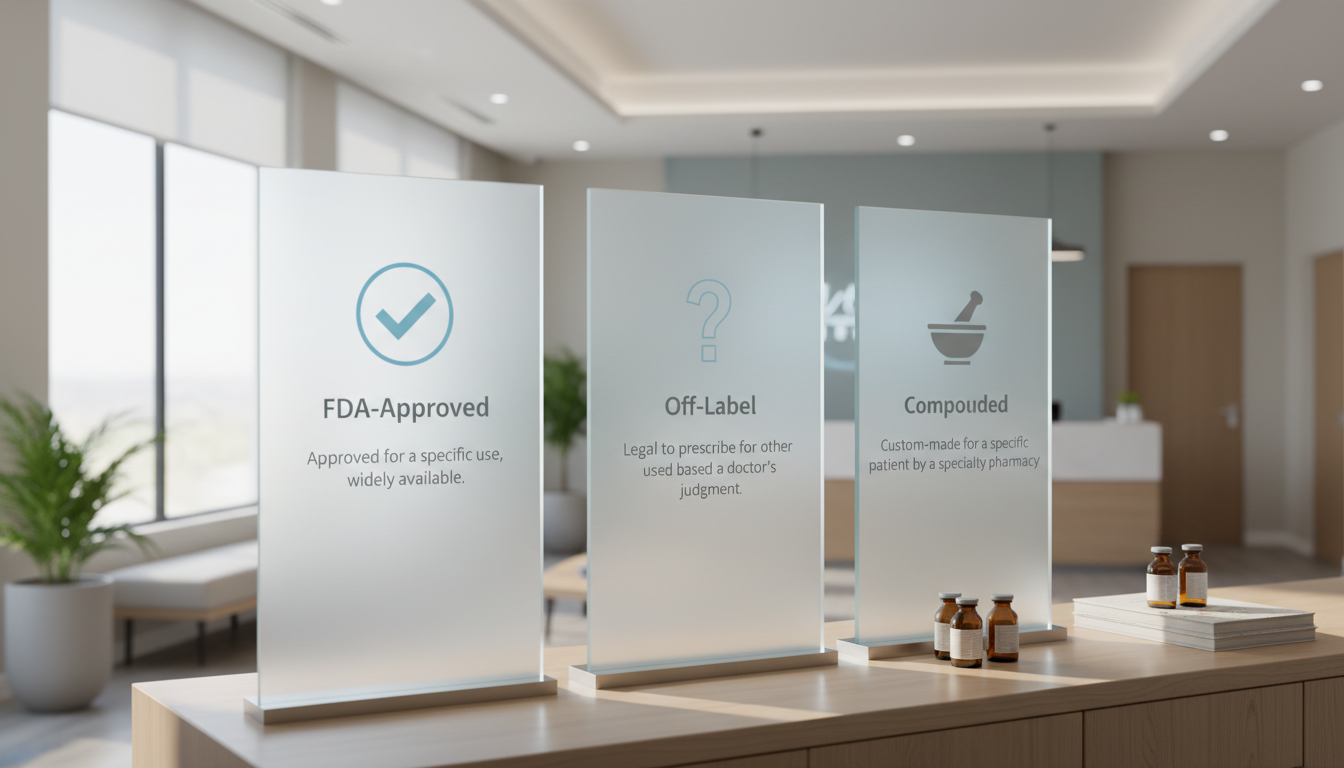
As of March 2026, there are no FDA-approved testosterone products specifically designed for women in the United States (Telehealth Ally). This means that any prescription for female testosterone therapy is "off-label." This is a legal and common practice where a doctor prescribes a medication for a purpose other than what it was officially approved for, based on their professional judgment and supporting scientific evidence.
Because there are no female-specific products, clinicians often prescribe either a compounded cream from a specialty pharmacy or a significantly reduced dose of a male-approved gel (Cedars-Sinai). This is why working with an experienced provider is non-negotiable. They must know how to calculate and prescribe a dose that is safe and effective for the female body. You can learn more about finding a specialist in our guide on the best online HRT for menopause.
Dosing: Less is More
The mantra for female testosterone therapy is "start low and go slow." The doses are a small fraction of what men receive.
- Typical Dose: Research cites typical daily doses for transdermal (topical) application ranging from 0.5 mg to 2 mg per day (HealthHighRoad, Telehealth Ally). Another source mentions a range of 5 mg to 10 mg per day of topical cream, which highlights the variability in compounded formulas (TRT Catalog).
- Blood Level Targets: The goal is to bring a woman's serum testosterone levels into the mid-to-upper end of the normal physiological female range, typically 50 to 70 ng/dL (HealthHighRoad). For free testosterone, the target is often around 1.5 to 2.4 ng/dL (Telehealth Ally).
Regular blood work is essential to ensure levels stay within this safe and effective zone. You can explore options for testing with an at-home testosterone testing kit before discussing the results with a provider.
Safety and Side Effects: The Latest 2026 Data
For years, concerns about cardiovascular and cancer risks loomed over testosterone therapy for women. However, recent, large-scale data has provided significant reassurance. A major claims database analysis from Johns Hopkins University, which reviewed data from 2009 to 2022, found that women receiving testosterone therapy had a lower risk of both major adverse cardiac events (MACE) and invasive breast cancer compared to women who did not receive the therapy.
The most common side effect is a higher risk of hirsutism, which is unwanted hair growth (e.g., on the face or chest). The 2026 T-TRANSPORT clinical trial also noted increased hair growth as a more frequent side effect in the testosterone group (Nature Communications). Other potential androgenic side effects, like acne or voice deepening, are rare when doses are kept within the appropriate physiological range and monitored closely. The key is that these risks are minimized with correct dosing. You can read more about the potential side effects of TRT in women in our detailed guide.

Comparing Testosterone Benefits for Females and Men
While the same hormone is at play, testosterone replacement therapy (TRT) for men and women are two entirely different worlds. Understanding the differences in goals, dosing, and expected outcomes is key.
The primary goal of male TRT is to restore testosterone levels from a state of clinical deficiency (hypogonadism) back to a healthy adult male range. This often involves addressing a steep decline in the hormone. The benefits of testosterone for men over 50 and the benefits of testosterone for men over 60 are often dramatic and life-changing. Men frequently experience a significant return of energy, a major boost in libido, improved erectile function, increased muscle mass, and faster fat loss. You can explore these further in our articles on what happens when you start a testosterone shot and the positive side effects of TRT. Doses for men are much higher, often ranging from 100 to 200 mg per week via injection, to achieve levels between 500 and 1000 ng/dL.
In contrast, the testosterone benefits for females are achieved with a more delicate touch. The goal is not to reach male levels but to gently nudge a woman's own levels from the low end of the female range back into the optimal mid-to-upper end. The doses are tiny in comparison, often just 5-10% of a male starting dose. The benefits, while significant, can be more subtle. Instead of a massive surge in muscle, a woman may notice it's easier to maintain her tone. Instead of a radical shift in libido, she may find her desire has returned to what felt "normal" a decade ago. It's about rebalancing and restoring, not overpowering the body's natural chemistry.
Want to see which hormonal or peptide therapies might fit your specific goals and biology? Our free quiz takes 3 minutes and matches you with vetted providers who specialize in personalized medicine.
Navigating Treatment: From Off-Label to Finding a Doctor
Because there isn't a simple, one-size-fits-all product for women, the path to starting therapy requires some knowledge. It's about understanding the landscape of treatment options and finding a qualified medical professional to guide you.
The "off-label" status of female testosterone therapy means that you won't find a product named "Testosterone for Women" at your local pharmacy. Instead, your provider will likely take one of two routes:
- Compounded Creams: Many of the most experienced testosterone optimization therapy doctors work with compounding pharmacies. These pharmacies can create a topical cream or gel with the exact dose of testosterone prescribed for you. This allows for highly precise and individualized dosing.
- Dosage Adjustments of Male Products: Some doctors may prescribe a male-approved gel (like AndroGel or Testim) and provide specific instructions on how to apply a much smaller amount than the standard male dose. This requires careful instruction and patient adherence to avoid applying too much.
It is critical to find a provider who is well-versed in female hormone optimization. A general practitioner may not be familiar or comfortable with prescribing testosterone off-label for women. Look for specialists in endocrinology, anti-aging, or functional medicine who list hormone replacement as a core part of their practice. You can start by checking directories of online testosterone therapy clinics or full-service peptide clinics near you.
It's also important to have realistic expectations. Testosterone is not a panacea. For instance, a major 2026 clinical trial published in Nature Communications found that testosterone therapy did not improve IVF success rates for women with diminished ovarian reserve. This underscores that therapy is targeted for specific symptoms like HSDD and is not a cure-all for every female health concern.
What to Consider Before Starting
Thinking about exploring testosterone therapy? Here are the key steps and considerations to discuss with a qualified provider.
First, the process should always begin with a comprehensive evaluation. This includes a detailed discussion of your symptoms, your medical history, and a blood test to measure your current hormone levels. You can't know if you need more testosterone without first knowing how to test your testosterone levels and establishing a baseline. This initial test should measure your total and free testosterone, at a minimum.
Second, have an open conversation about the potential benefits and risks. Discuss your primary goals. Are you mainly concerned with libido, energy, or overall vitality? A good doctor will set realistic expectations based on the current scientific evidence. They should also explain the monitoring process, which involves follow-up blood tests to ensure your levels remain in the optimal range and to watch for any potential side effects. You can read about the long term effects of testosterone injections to understand why monitoring is so important.
Finally, discuss the different delivery methods, whether it's a compounded cream or another option. Your provider can help you decide which method best fits your lifestyle and budget. Since the therapy is off-label, it's rarely covered by insurance, so understanding the costs upfront is crucial.
Ready to take the first step and explore your options with a professional? Take our free 3-minute quiz to get matched with a licensed and vetted provider who specializes in hormone optimization and can answer your specific questions.
FAQs
What are the main testosterone benefits for females?
The most scientifically supported benefit is for treating hypoactive sexual desire disorder (HSDD) in postmenopausal women, leading to improved libido and sexual satisfaction. Many women also report significant improvements in energy levels, mood stability, mental clarity, and the ability to maintain muscle mass and bone density.
Is testosterone therapy for women safe?
When prescribed at appropriate physiological doses and monitored by a qualified doctor, testosterone therapy for women has a strong safety profile. A large 2022 database analysis from Johns Hopkins found that women on testosterone therapy actually had a lower risk of major cardiac events and breast cancer. The most common side effect is a risk of increased hair growth (hirsutism).
How much does testosterone for women cost?
Costs vary widely because treatment is off-label and not typically covered by insurance. Compounded creams can range from $50 to $150 per month, depending on the pharmacy and dosage. This does not include the cost of doctor consultations or follow-up lab work.
How long does it take to see results from testosterone therapy in women?
Some women report feeling improvements in energy and mood within a few weeks. However, more significant and measurable benefits, such as changes in libido and body composition, are generally observed within 3 to 6 months of consistent, correctly dosed therapy.
Why isn't there an FDA-approved testosterone product for women?
Developing an FDA-approved product requires large, expensive, and lengthy clinical trials. Pharmaceutical companies have been slow to invest, partly due to the challenge of determining a universally "correct" dose for women and a historically smaller perceived market compared to men's TRT. This has left off-label use and compounding as the primary options for now.
Contributing to evidence-based peptide education and provider transparency.
Too many clinics, not enough clarity?
We don't sell peptides. Tell us your goals and we'll connect you with a vetted provider who can figure out what actually makes sense for you.
See what's right for youRelated articles
Which Protein Supplements for Muscle Growth Actually Work?
Tired of the hype? Find out which protein supplements for muscle growth are backed by science and learn how to pick the right one for your goals.
Hormone TherapyWhat Are the Real Magnesium Glycinate Benefits?
Uncover the science-backed magnesium glycinate benefits. We explore its effects on sleep, stress, and muscle function and explain why it's a top choice.
Hormone TherapyWhat B12 Shot Benefits Can You Actually Expect?
B12 shots are often hyped for energy, but the real b12 shot benefits are more specific. Learn who is a true candidate and what results to expect.